Types of Shaft Couplings
The first step in selecting a coupling is understanding the different types available and their respective strengths:
Rigid Couplings
Rigid couplings provide a solid connection between two shafts, delivering precise torque transmission and no ability to compensate for misalignment. They are suitable only when shafts are already perfectly aligned.
Flexible Couplings
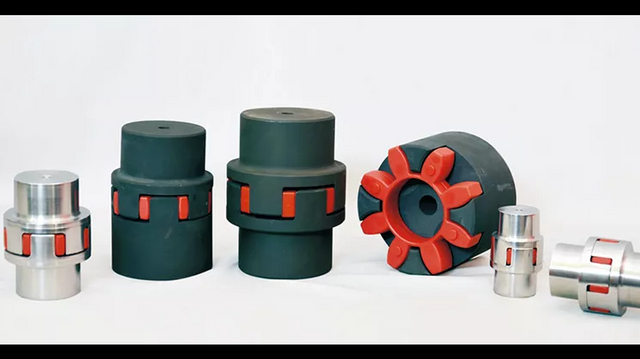
Flexible couplings are designed to accommodate minor misalignments while transmitting torque. These are widely used in industrial applications where perfect alignment cannot be guaranteed.
Common flexible designs include:
Jaw couplings – good for general duty with vibration damping
Bellows couplings – suitable for high precision with low friction
Disc couplings – ideal for applications requiring torsional stiffness
Oldham couplings – useful where parallel misalignment is present
Each type features trade‑offs in terms of torque capacity, flexibility, backlash, and cost.
Key Factors in Shaft Coupling Selection
Selecting the right coupling involves considering a combination of mechanical requirements and environmental conditions. Below are the essential factors that influence your choice.
Torque and Power Requirements
The coupling must be able to support the maximum operating torque and any peak or shock loads encountered during operation. Engineers often apply a service factor to the calculated torque to account for real‑world conditions like start‑stop cycles or sudden load changes.
Shaft Size and Configuration
Matching the coupling size to the shaft diameters and connection type (keyed, clamped, etc.) is critical. An improperly sized coupling can result in slippage or mechanical failure.
Misalignment Compensation
Shaft misalignment can take several forms:
Angular misalignment (shaft axes at different angles)
Parallel misalignment (axes are parallel but offset)
Axial misalignment (movement along the shaft’s axis)
Flexible couplings are typically chosen when any of these misalignments are expected, as they can absorb shocks and reduce stress on connected components.
Operating Speed (RPM)
Different couplings perform differently under various rotational speeds. Some designs are better suited for high RPM environments, while others are optimized for low‑speed applications.
Materials and Environment
Material selection affects durability and performance:
Environmental considerations such as temperature, corrosive elements, and space constraints should be factored into the coupling choice.
Step‑by‑Step Shaft Coupling Selection Process
To simplify the selection process, follow a structured approach that combines engineering judgment with industry‑proven practices.
Step 1 — Define the Application Requirements
Start by understanding the operational context: the machinery involved, the transmitted power, expected loads, speed range, and maintenance environment. Clarifying these needs early makes subsequent selection easier and more precise.
Step 2 — Choose the Coupling Type
Based on the misalignment expected and torque requirements, decide between rigid or flexible couplings. Flexible designs are generally more common due to their ability to handle imperfect alignment and vibration.
Step 3 — Determine Appropriate Size
Refer to manufacturer catalogs or selection guides to match torque capacity, shaft diameters, and speed limits with a specific coupling size. Avoid oversizing, as unnecessarily large couplings add cost and rotational inertia.
Step 4 — Consider Materials and Durability
Choose materials that can withstand the operating environment. Stainless steel and high‑strength alloys are preferred for harsh industrial settings, while polymer elements may suit lighter machinery.
Step 5 — Validate the Selection
Use coupling selection tools or software, and discuss with suppliers if necessary, to ensure the intended design will perform reliably under all expected conditions.
Best Practices and Common Mistakes
Choosing a shaft coupling often seems straightforward, but there are pitfalls that professionals should avoid:
Common Mistakes
Incorrect torque sizing, leading to premature wear or failure.
Neglecting misalignment requirements, which causes vibration and component fatigue.
Overlooking environmental factors such as temperature or corrosive conditions.
Practical Selection Tips
Always match couplings not only to static calculations but expected dynamic conditions.
Discuss unusual applications with manufacturers early in the design phase.
Regularly inspect couplings for wear and alignment deviation to extend service life.
Conclusion
Selecting the right shaft coupling is essential to the performance and reliability of any power transmission system. Whether you are dealing with heavy industrial machinery, pumps, conveyors, or precision systems, understanding torque requirements, shaft alignment, coupling types, and environmental conditions helps you make the best decision. Integrating these selection steps into your engineering workflow reduces maintenance issues and enhances operational stability over time.
In complex industrial scenarios — such as cement production lines, sugar mill applications, or automated conveyor systems — partnering with experienced suppliers like Kasin Industries can further streamline the selection process. With decades of experience in mechanical components and transmission solutions, Kasin Industries supports optimal coupling choices tailored to your application needs.
FAQ
1. What is a shaft coupling used for?
A shaft coupling connects two shafts to transmit torque while compensating for misalignment and reducing vibration.
2. How do I know which coupling type to choose?
Determine your application's misalignment conditions, torque needs, speed, and environment to guide whether a rigid or flexible coupling is suitable.
3. Can a coupling handle shaft misalignment?
Flexible couplings are designed to accommodate angular, parallel, and axial misalignment, unlike rigid couplings.
4. Why is torque capacity important?
Proper torque capacity ensures the coupling can handle operational loads without slipping or failing.
5. How often should I inspect couplings?
Regular inspection schedules based on operating conditions help detect wear and maintain performance over time.