Overhead chain conveyors are a critical part of many industries, offering efficient material handling solutions, especially in spaces with limited floor area. By using vertical space for transportation, they help optimize factory layouts and improve workflow efficiency. This article will explore the various types of overhead chain conveyors, their features, applications, advantages, and how to choose the right one for your business.
1. Understanding Overhead Chain Conveyors
What is an Overhead Chain Conveyor?
An overhead chain conveyor is a system used to transport materials along a track placed above the floor. Unlike traditional ground-based conveyors, these systems maximize vertical space by suspending materials from a chain that moves along a set of tracks. Overhead chain conveyors are designed to handle a wide variety of products, ranging from lightweight, delicate items to heavier and bulkier materials.
These conveyors are especially useful in environments where floor space is limited or when there is a need to transport items across various stages of production. They play a crucial role in industries such as automotive manufacturing, food processing, and logistics.
Why Are Overhead Chain Conveyors Important?
Overhead chain conveyors are essential for industries looking to streamline operations. These systems enhance space utilization, improve production flow, and allow for the transportation of goods without requiring valuable floor space. As industrial needs grow more complex, overhead chain conveyors will continue to evolve, providing businesses with more reliable, efficient, and customized material handling solutions.
2. Key Components of Overhead Chain Conveyors
Chains
The heart of any overhead chain conveyor system is its chain. These chains are responsible for moving materials along the track, ensuring that products are transported efficiently and securely. The chains are typically made from durable materials, such as steel, to withstand the wear and tear of constant use. Depending on the type of conveyor system, the chains may come in various designs, such as roller chains, link chains, or welded steel chains.
Track System
The track system provides the pathway for the chain to move along. It is designed to support the weight of the chain and the products it carries. Overhead chain conveyors can have different track configurations, including single-track, dual-track, and enclosed tracks, depending on the complexity and load requirements of the application.
Drive System
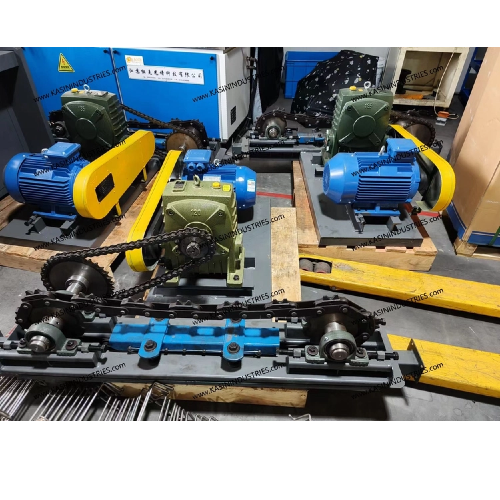
The drive system powers the movement of the conveyor chain. This system includes a motor, gearbox, and drive sprockets that connect to the chain. The motor provides the necessary power to move the chain, and the speed of the system can be adjusted to meet the specific needs of the production line. In some systems, the drive motor can be connected to a variable-speed drive, allowing for flexible control over the speed of the conveyor.
Attachments and Hangers
Attachments and hangers are used to suspend products from the chain. These can include hooks, trolleys, or special carriers that securely hold products as they move through the system. These attachments can be customized based on the type of material being transported and the specific needs of the application.
Control System
The control system manages the operation of the conveyor. It ensures the correct speed, movement, and positioning of products. The control system may include sensors, controllers, and programmable logic controllers (PLCs) to automate the movement of materials and monitor system performance.
3. Different Types of Overhead Chain Conveyors
Overhead chain conveyors come in various types, each designed to meet specific operational needs. Below are the most common types of overhead chain conveyors:
Single Track Overhead Chain Conveyors
Design and Features
Single-track overhead chain conveyors are the simplest form of overhead conveyors. These systems consist of a single track along which the chain moves, carrying products suspended from it. Single-track conveyors are often used in applications where the material being transported is not excessively heavy and does not require complex movement patterns.
Applications
Single-track overhead chain conveyors are typically used in light-duty applications. Industries that benefit from these conveyors include:
Small manufacturing facilities: Used for light product handling and simple production lines.
Packaging lines: Transporting packaged goods from one station to the next.
Assembly lines: For moving lightweight components through various stages of assembly.
Dual Track Overhead Chain Conveyors
Design and Features
Dual-track overhead chain conveyors are more advanced than single-track systems, featuring two parallel tracks that allow for more flexibility and increased load capacity. The additional track provides stability and supports the transport of heavier or bulkier products. The dual-track system can also handle more complex movements, such as intersections, multiple load stations, and varying speed requirements.
Applications
Dual-track conveyors are ideal for industries that require higher load capacities or more complex handling. These conveyors are commonly used in:
Automotive manufacturing: To transport parts across various stages of assembly.
Heavy-duty applications: For transporting bulk materials or heavy products like metal components.
Material handling: Used in large warehouses to move goods efficiently across the facility.
Four-Wheel Bi-Planar Overhead Chain Conveyors
Design and Features
Four-wheel bi-planar overhead chain conveyors use a sophisticated track design that ensures the chain moves smoothly through a series of two parallel tracks. The system is equipped with four wheels that run on two distinct planes, which helps stabilize the movement of products, reducing vibrations and preventing products from tipping over. This design also allows for greater precision in product handling, especially when transporting delicate or fragile materials.
Applications
The four-wheel bi-planar conveyor is ideal for industries that require precise, continuous, and stable material handling. Common applications include:
Electronics manufacturing: For the movement of fragile components through assembly and testing stages.
Food processing: Transporting packaged or perishable goods that need careful handling.
Pharmaceuticals: Moving items that require a high level of cleanliness and precision.
Enclosed Track Overhead Chain Conveyors
Design and Features
Enclosed track overhead chain conveyors have tracks that are fully enclosed, providing additional protection to the materials being transported. The enclosed design prevents dirt, dust, and other contaminants from affecting the products, making these systems ideal for environments where cleanliness is crucial.
Applications
Enclosed track conveyors are typically used in industries where product cleanliness and protection are a priority. These systems are often found in:
Food processing: To ensure hygiene and prevent contamination during product transportation.
Pharmaceutical manufacturing: For moving sensitive materials that must be kept free from contamination.
Electronics assembly: To protect delicate components during transport through manufacturing lines.
Pneumatic Overhead Chain Conveyors
Design and Features
Pneumatic overhead chain conveyors combine traditional chain systems with pneumatic power to assist in product transportation. Pneumatic systems provide additional force to help move products along the track, especially in high-speed or high-volume applications. These conveyors often use air pressure to help push the materials or reduce friction, ensuring faster and smoother movement.
Applications
Pneumatic overhead chain conveyors are best suited for applications that require high-speed transportation or environments where cleanliness and minimal contact are important. They are commonly used in:
Pharmaceutical and food industries: Where a clean and fast-moving conveyor system is needed.
High-volume manufacturing: For industries requiring rapid product flow, such as automotive and consumer goods production.
4. Advantages of Different Types of Overhead Chain Conveyors
Space Saving
Overhead chain conveyors are designed to maximize available space. By utilizing the air above the production floor, these conveyors free up valuable floor space for other essential operations. Whether it's in a small factory or a large warehouse, this space-saving feature allows for a more efficient layout and can even accommodate other machinery or storage.
Type | Space Saving | Explanation |
Single Track | High | Ideal for smaller spaces with less complex systems. |
Dual Track | Moderate | Suitable for larger systems with heavier loads. |
Four-Wheel Bi-Planar | High | Efficient for complex movement in limited space. |
Enclosed Track | Moderate to Low | Best for environments requiring cleanliness. |
Pneumatic | High | Provides high-speed transportation with minimal space. |
Load Handling Capabilities
The different types of overhead chain conveyors vary in their load handling capabilities. Systems like dual-track and four-wheel bi-planar conveyors are designed to carry heavier loads, while single-track conveyors are better suited for lighter materials. Pneumatic systems offer high-speed transport but may have limitations when it comes to heavier materials.
Customization
Overhead chain conveyors are highly customizable. Different track layouts, speeds, and attachments can be tailored to fit specific operational requirements. For example, systems can be designed to move products in complex directions, such as turns and inclines, or adapted to handle varying loads and speeds.
5. Choosing the Right Type of Overhead Chain Conveyor
Considerations for Selection
When selecting an overhead chain conveyor, several factors should be considered:
Load Capacity: Choose a system that can handle the weight and size of the materials you need to transport.
Production Speed: Some systems are better for high-speed applications, while others are suited for slower, more precise movement.
Space Availability: Consider how much vertical space is available and how the conveyor will fit into the existing layout of your factory or warehouse.
Industry-Specific Recommendations
Different industries require different types of overhead chain conveyors. For instance, automotive manufacturing often requires heavy-duty, dual-track systems for large components, while food processing industries may prioritize enclosed or pneumatic systems to ensure cleanliness and efficiency.
6. Conclusion
Overhead chain conveyors come in various types, each designed to meet the unique demands of different industries. Understanding the distinctions between single-track, dual-track, four-wheel bi-planar, enclosed track, and pneumatic systems enables businesses to choose the most suitable solution for their production lines. The right type of overhead chain conveyor can help optimize space, increase production speed, and ensure reliable material handling, leading to improved operational efficiency.
At Kasin Industries (Shanghai) Co., Ltd., we specialize in providing a wide range of overhead chain conveyors tailored to your specific needs. Our expertise in customizing systems for different industries ensures that we can offer solutions that not only enhance your production efficiency but also meet the space and load requirements of your operation. Whether you need a simple conveyor for light materials or a more advanced system for heavy-duty applications, we can help you find the perfect fit. Contact us today to learn more about our innovative conveyor solutions and how we can assist you in optimizing your material handling processes.
7. FAQ
Q1: What are the main differences between single-track and dual-track overhead chain conveyors?
Answer: Single-track conveyors are simpler and suited for lighter loads, while dual-track systems offer greater stability and can handle heavier and bulkier products.
Q2: How do I determine which type of overhead chain conveyor is best for my industry?
Answer: The choice depends on factors like load capacity, speed, material handling requirements, and available space. Industries with heavy products may benefit from dual-track systems, while food and pharmaceutical industries often prefer enclosed or pneumatic systems.
Q3: Can overhead chain conveyors handle both light and heavy loads?
Answer: Yes, but different types are better suited for different loads. Single-track conveyors are ideal for lighter materials, while dual-track and four-wheel bi-planar systems are designed for heavier items.
Q4: Are there any industries that particularly benefit from using enclosed track overhead chain conveyors?
Answer: Yes, industries like food processing, pharmaceuticals, and electronics assembly, where cleanliness and material protection are essential, benefit from using enclosed track conveyors.
Q5: How customizable are the different types of overhead chain conveyors?
Answer: Overhead chain conveyors are highly customizable, with options for track layout, speed adjustments, and attachments designed to meet specific material handling needs.