Overhead chain conveyors are essential in modern industrial environments, offering numerous benefits such as space optimization, efficient material handling, and increased productivity. These systems are particularly beneficial in settings where floor space is limited, or when there is a need to transport heavy and bulky items through various stages of a production process. In this article, we will explore the functionality, applications, advantages, and important considerations for selecting an overhead chain conveyor, with a focus on its pivotal role in manufacturing, warehouse logistics, and more.
1. Understanding Overhead Chain Conveyors
Overhead chain conveyors are material handling systems that use a chain to move products along a track that is positioned above the floor. Unlike traditional conveyors that operate on the ground, overhead systems make use of vertical space, making them a valuable solution for crowded environments. These systems are built to handle large quantities of items or heavy materials efficiently and are particularly effective in industries that require the transportation of goods across various stages of production.
What Makes Overhead Chain Conveyors Different?
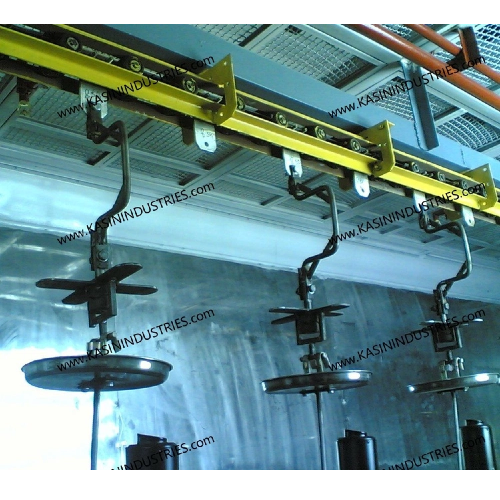
Overhead chain conveyors have a unique design, typically comprising chains, wheels, and a track system. They operate by suspending materials from a conveyor chain, allowing the goods to move smoothly along the track without requiring floor space. This system is most commonly used in industries that require continuous and efficient movement of products such as automotive manufacturing, food processing, and warehouse logistics.
Key Features of Overhead Chain Conveyors
Space Efficiency: These conveyors make use of vertical space, freeing up the ground area for other machinery and operations.
High Load Capacity: Capable of transporting heavy materials, such as automotive parts or food products, without compromising speed.
Customizability: Overhead chain conveyors can be customized for various applications, depending on factors such as load capacity, material type, and production layout.
2. The Core Functionality of Overhead Chain Conveyors
Overhead chain conveyors work by utilizing chains that move along tracks positioned above the production floor. This section dives deeper into how these systems operate and the components that make them functional.
How Do Overhead Chain Conveyors Work?
The operation of an overhead chain conveyor is based on a simple yet efficient mechanism. The chain, which is connected to a motorized drive system, moves along a set of tracks. Materials are attached to the chain using specialized hooks or hangers, which are then transported to the desired location along the track. The motion of the chain is controlled by a motor, which provides the necessary power to keep the system moving continuously or in batches, depending on the specific needs of the operation.
The key components of an overhead chain conveyor system include:
Chains: These are the main carriers of the materials, ensuring that products are moved smoothly and securely along the track.
Drive System: The drive system consists of a motor that powers the movement of the chain. It is usually equipped with a variable speed drive to adjust the speed of transportation.
Track System: The track system is designed to support the chain and materials while maintaining proper alignment and stability.
Hangers/Attachments: These are used to suspend materials from the chain, allowing for easy transport without affecting the integrity of the product.
Tensioners: Used to maintain the correct tension in the chain, ensuring consistent and smooth movement.
Types of Materials Handled by Overhead Chain Conveyors
Overhead chain conveyors are versatile and can handle a wide range of materials, including:
Heavy and Bulky Items: Items like automotive parts, machinery components, and pallets are easily handled by overhead chain conveyors.
Fragile or Sensitive Products: Food products or delicate items can be securely transported using specialized attachments that prevent damage.
Oddly Shaped or Large Items: The flexibility of the conveyor system allows it to transport materials of various shapes and sizes without difficulty.
Movement Mechanism: Continuous or Batch Processing
Overhead chain conveyors can be set up for continuous or batch movement, depending on the nature of the production line:
Continuous Movement: Ideal for mass production lines where products are moved seamlessly from one station to another.
Batch Movement: Suitable for situations where products need to be grouped together and moved in batches, such as in food processing lines or automotive assembly.
3. Main Uses of Overhead Chain Conveyors in Industries
Overhead chain conveyors are used across a variety of industries, each with specific needs and requirements. Below are the primary applications where these systems prove invaluable.
Industrial Automation
In industrial automation, overhead chain conveyors are used to transport products between different stages of the manufacturing process. This eliminates the need for manual handling, increasing efficiency and reducing the risk of human error. These systems are essential in environments where products must move quickly and without disruption.
Automotive Manufacturing: In the automotive industry, overhead chain conveyors are used to transport car parts from one assembly station to the next, ensuring a smooth and efficient production line.
Electronics Assembly: Overhead conveyors are used to move electronic components through assembly lines, where they are assembled, tested, and packaged.
Warehouse and Logistics
In warehouses and distribution centers, overhead chain conveyors play a crucial role in optimizing storage and handling of goods. By utilizing overhead space, these systems reduce the need for floor-based conveyors, maximizing the available floor area for other uses, such as packaging or shipping.
Material Handling: Overhead conveyors are ideal for transporting goods across long distances, particularly in high-bay warehouses where ground-based conveyors may not be practical.
Order Fulfillment: In e-commerce and distribution, overhead conveyors help streamline the order fulfillment process by transporting products from picking areas to packaging stations.
Processing Lines
In processing industries, overhead chain conveyors are used to move products through various processing stages. They are often used in industries where the goods need to be subjected to multiple steps before being finished.
Food Processing: In the food industry, these conveyors are used to transport food products through processing, packaging, and labeling stages, ensuring hygienic handling and continuous operation.
Textile Industry: Overhead conveyors are used to move fabrics and garments through different stages of production, from washing to drying and packaging.
Specialized Industries
Overhead chain conveyors are also widely used in specialized applications, including:
Painting and Powder Coating: In industries where items need to be painted or coated, overhead chain conveyors provide an efficient way to transport products through different stages of painting or coating, minimizing the chance of contamination or damage.
Chemical Processing: These conveyors are used in chemical manufacturing plants to move materials between different processing stages while maintaining proper safety standards.
4. Advantages of Using Overhead Chain Conveyors
Overhead chain conveyors offer several advantages that make them a preferred choice in industrial and manufacturing environments.
Space Efficiency
One of the most significant advantages of overhead chain conveyors is their ability to optimize factory space. By using overhead space, these systems free up valuable floor area for other machinery, storage, or workstations. This makes them ideal for factories with limited space or high-density production lines.
Advantage | Explanation |
Maximized Floor Space | Frees up valuable ground space for other operational needs. |
Efficient Workflow | Materials are moved quickly and efficiently without obstruction. |
Less Foot Traffic | Reduces worker congestion and enhances safety in the workspace. |
High Load Capacity
Overhead chain conveyors are designed to handle various loads, from lightweight products to heavy machinery components. Their robust design ensures they can carry substantial weight without compromising performance.
Heavy-Duty Capabilities: They can carry loads up to several hundred kilograms, making them suitable for industries such as automotive and steel manufacturing.
Efficiency and Speed
Overhead chain conveyors can move products faster than manual handling or traditional conveyors. The automated system ensures a smooth and continuous flow of products, which helps reduce production time and increase throughput.
Safety and Ergonomics
By automating material handling, overhead chain conveyors improve workplace safety. Workers are not required to manually lift or move heavy items, reducing the risk of injury. Additionally, the system’s ability to operate overhead minimizes the need for workers to bend or crouch, improving overall ergonomics.
5. Considerations When Choosing an Overhead Chain Conveyor
When selecting an overhead chain conveyor, several factors must be considered to ensure the system meets the specific needs of the operation.
Factory Layout and Space Optimization
Before installing an overhead chain conveyor, it’s essential to assess the available space and factory layout. The system must be designed to fit seamlessly into the existing infrastructure, with enough clearance for the conveyor to operate without obstruction.
Load Capacity and Material Type
It’s crucial to evaluate the weight and size of the products to be transported. Overhead chain conveyors come in various models with differing load capacities, so it’s essential to choose one that matches the needs of the production line.
Maintenance and Upkeep
Like any mechanical system, overhead chain conveyors require regular maintenance. This includes:
Lubrication: Keeping the chain lubricated to ensure smooth operation.
Monitoring Wear and Tear: Checking for any signs of damage to the chain or other components and replacing worn-out parts.
Adjusting Tension: Ensuring the proper tension in the chain to prevent slippage and maintain efficiency.
Customization and Flexibility
Overhead chain conveyors can be customized to fit the specific needs of various industries. Whether it’s adjusting the track layout, modifying the load capacity, or adding special attachments, a tailored solution can enhance the conveyor’s effectiveness.
6. Conclusion
Overhead chain conveyors are vital to modern industrial operations, offering key advantages such as space optimization, enhanced efficiency, and the ability to manage a variety of loads. These systems are indispensable in industries like automotive manufacturing, food processing, and more, where continuous and reliable product transportation is essential to smooth operations.
At Kasin Industries (Shanghai) Co., Ltd., we specialize in providing high-quality overhead chain conveyors designed to meet the diverse needs of our clients. As technology continues to advance, our systems evolve to offer even more efficient, reliable, and customized solutions tailored to your specific manufacturing and logistics requirements.
If you're looking for a robust conveyor solution that enhances productivity and optimizes space, we invite you to explore our products and learn how we can help streamline your operations. Contact us today to discuss your needs, and let us provide the perfect solution for your business.
7. FAQ
Q1: What are the primary benefits of using an overhead chain conveyor over a traditional conveyor?
Answer: The main benefits include space efficiency, the ability to handle heavy and bulky items, and increased speed and productivity. Overhead chain conveyors use vertical space, freeing up floor space for other operations.
Q2: How much weight can an overhead chain conveyor carry?
Answer: Depending on the system’s design, overhead chain conveyors can carry loads ranging from light products to several hundred kilograms, making them ideal for heavy-duty applications.
Q3: How do overhead chain conveyors improve manufacturing processes?
Answer: They automate material handling, reducing manual labor, improving efficiency, and ensuring a continuous flow of products through the production line.
Q4: What are the maintenance requirements for an overhead chain conveyor?
Answer: Maintenance includes regular lubrication, checking for wear and tear, and adjusting chain tension to maintain smooth operation.
Q5: Can overhead chain conveyors be customized for specific industries?
Answer: Yes, these systems can be customized to meet the unique needs of different industries, including adjustments for load capacity, material types, and track layouts.