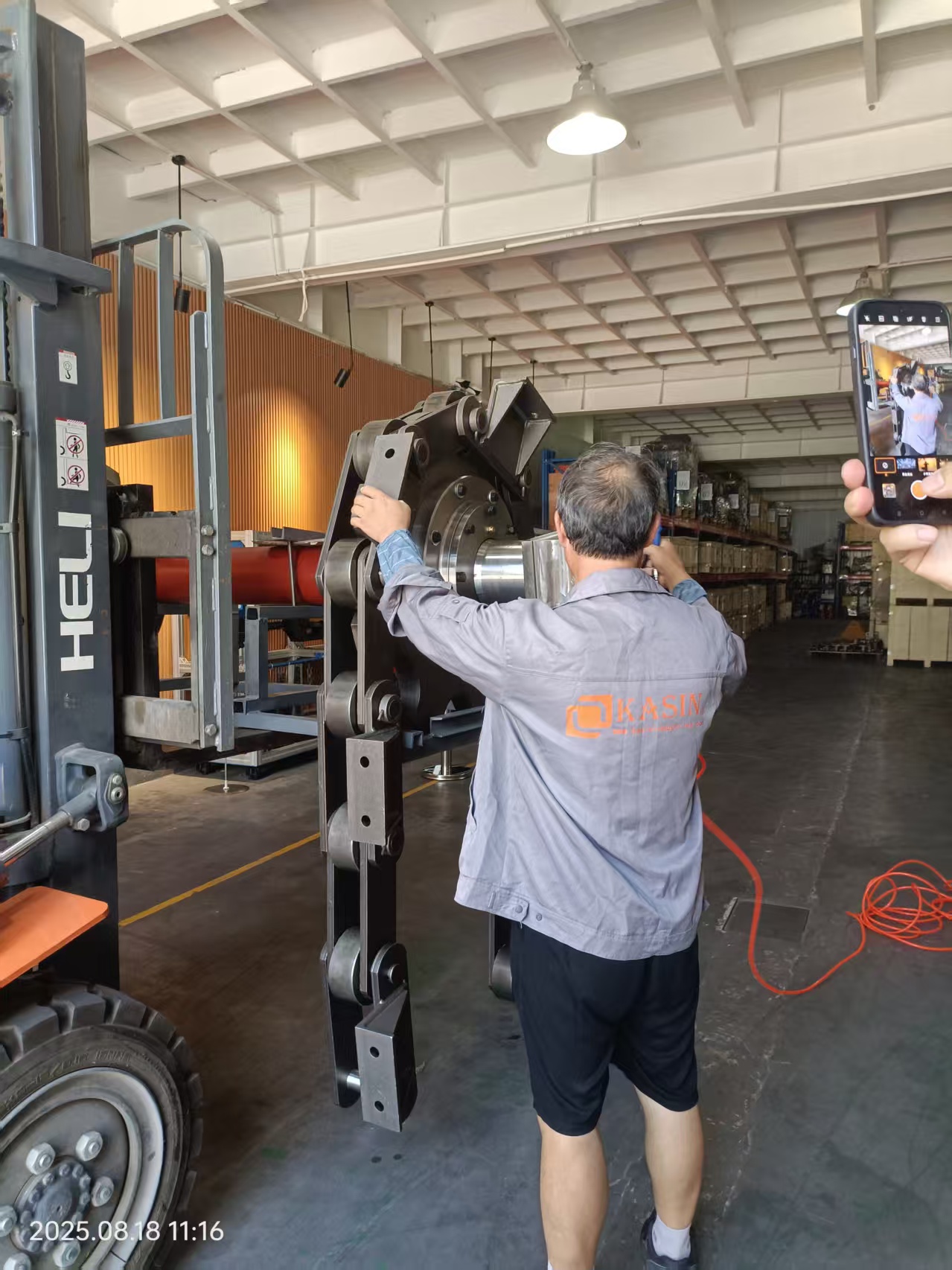
Unplanned downtime in a cement plant can cost tens of thousands of dollars per hour. The reliability of vertical transport systems presents a critical vulnerability for facility managers everywhere. Equipment breakdowns directly disrupt production schedules. They severely impact your overall profitability. Upgrading or specifying a new bucket elevator requires choosing between belt and chain traction mediums. Both systems have distinct operational footprints. However, misapplying them in a harsh cement processing line guarantees premature failure.
While belt elevators excel in high-speed, finished-product applications, raw processing stages are far less forgiving. The extreme heat, relentless abrasion, and unpredictable loads of raw materials and clinker change the equation entirely. These harsh factors often make a bucket elevator chain the mathematically and operationally superior choice. In this article, you will learn how to evaluate operational demands for cement handling. We will explore the specific limitations of belt elevators. Finally, you will discover precisely when and why chain systems offer unmatched durability.
Key Takeaways
Temperature limits dictate the baseline: Belt systems degrade rapidly above 130°C (266°F), making chain systems mandatory for hot clinker and kiln feed.
Abrasion resistance differs: Coarse, sharp materials risk catastrophic belt tearing, whereas heavy-duty steel chains absorb and resist mechanical impact.
Maintenance profiles vary: Belts require specialized vulcanization and splicing for repairs; chain systems allow for localized link replacement, reducing specialized labor reliance.
Zonal application is best: Plants optimize CapEx and OpEx by using chains at the front end (raw meal, clinker) and belts at the back end (finished cement).
The Operational Demands of Cement Handling
Cement production pushes material handling equipment to its absolute limits. You must handle materials ranging from large, jagged limestone to hot clinker. Eventually, the process yields ultra-fine finished cement. This severe granulometry variation requires robust mechanical solutions. Crushed limestone presents sharp edges. These sharp edges easily gouge softer traction mediums over time.
Kiln-adjacent processes expose conveying equipment to constant high temperatures. Thermal stress degrades non-metallic components quickly. Heat transfers from the hot material into the elevator buckets. It then travels directly into the belt or chain attachments. Continuous heat exposure hardens rubber parts. It causes micro-cracks and leads to sudden, catastrophic equipment failures.
Micro-particulates act as a continuous grinding compound. Dust ingress attacks all moving parts inside the elevator casing. It infiltrates bearings and pin joints constantly. You need robust sealing mechanisms. Alternatively, you need extreme metallurgical hardness to survive this highly abrasive environment day after day.
Evaluating an elevator system means prioritizing Mean Time Between Failures (MTBF). Facility managers must ensure easy emergency maintenance. You want equipment capable of surviving a long operational lifecycle under maximum capacity loads. Choosing the wrong medium reduces this lifecycle drastically.
Belt Bucket Elevators: Where They Succeed and Fail
Belt systems have excellent core strengths. They are capable of much higher running speeds. Their lighter overall weight allows greater vertical lift heights. They run significantly quieter than steel alternatives. They offer smoother continuous discharge during daily operation. You will find them ideal for finished cement silos. The material there is fine, cool, and fluid.
However, belts have critical limitations in heavy cement processing. Heat vulnerability is a major issue. Even specialized heat-resistant belts harden and crack over time. They lose critical tensile strength when constantly exposed to hot materials. Once the rubber compounds degrade, the belt snaps under tension.
Tramp metal and tearing present another massive operational risk. A single piece of tramp metal can slice a belt instantly. Oversized clinker lumps can wedge between the belt and pulleys. This wedging causes severe longitudinal belt tears. This event results in catastrophic failure. Prolonged downtime follows immediately because replacing a snapped belt takes several days.
When a Bucket Elevator Chain is the Superior Choice
Handling high-temperature materials demands extremely tough solutions. You must use chains for hot clinker transport. They are mandatory for kiln bypass dust and pre-heater feeds. Steel construction maintains structural integrity effortlessly. It easily survives temperatures melting rubber belts. A bucket elevator chain dissipates heat efficiently across its links.
Resisting heavy impact and severe abrasion is critical. You should use chains for raw material handling. They easily manage abrasive crushed limestone and gypsum. Heavy-duty chains withstand massive physical impacts. Coarse materials drop heavily into the boot section. Chains absorb this physical shock without catastrophic tearing or structural deformation.
Predictable wear and localized repair make chains highly practical. Belts often require full replacement if compromised. In contrast, chain systems allow your maintenance team to act surgically. You can replace individual worn links safely. You can swap damaged pins or bent bucket attachments quickly. This modularity saves countless hours of hard labor.
Common configurations fit specific cement needs perfectly. A central chain offers incredibly high capacity. This single-strand design fits narrow shafts well. It handles high-load applications efficiently. A double strand chain provides extra stability for wider buckets. It reliably handles uneven loading scenarios across the elevator casing.
Core Evaluation Dimensions: Belt vs. Chain
Let us compare the financial realities of both systems. Belt systems generally have a lower initial capital expenditure. However, they can incur massive operational expense spikes later. A sudden tear stops production instantly. A heavy-duty bucket elevator chain requires a higher initial investment upfront. Yet, it delivers predictable, linear wear. You experience lower emergency maintenance costs in harsh processing zones.
Core Comparison of Elevator Mediums
Evaluation Dimension
Belt Elevator Systems
Chain Elevator Systems
Financial Impact
Lower initial CapEx; high OpEx risk during tears.
Higher initial CapEx; predictable OpEx via linear wear.
Maintenance Needs
Requires specialized third-party vulcanization.
In-house link replacement using standard tools.
Traction Reliability
Friction-based; prone to slippage in dust.
Sprocket-engaged; zero slippage risk.
Maintenance realities directly impact your facility downtime. Belt splicing requires specialized third-party contractors. They need specific environmental conditions like clean, dry air. Chain maintenance is much simpler and more accessible. Your in-house mechanical teams handle routine tensioning. They perform link replacement easily. They use standard tools to fix bucket elevator chains without hiring outside contractors.
Traction and slippage dictate overall system reliability. Belts rely purely on friction to move heavy loads. They suffer dangerous slippage if the head pulley loses grip. Dust buildup causes this friction loss frequently. Chains rely on positive mechanical engagement instead. They lock onto drive sprockets securely. This eliminates slippage risks entirely, even in highly dusty environments.
Implementation Risks and Upgrade Considerations
Upgrading to a specialized cement industry conveyor chain requires careful planning. You must execute several critical steps for a successful retrofit to avoid secondary failures.
Align sprockets and wear parts perfectly: Match the chain pitch precisely with heat-treated, segmented sprockets. This careful alignment prevents rapid, uneven wear across the steel links.
Implement specific lubrication protocols: Traditional wet lubricants attract cement dust quickly. This mixture creates a highly abrasive paste. Use self-lubricating chain joints or dry-film lubricants instead.
Verify motor torque capacities: Chain systems are significantly heavier than rubber belts. Your existing drive motor must handle this increased starting inertia without overheating.
Reinforce the casing structure: Retrofitting a belt casing requires thorough structural verification. Ensure the head section can physically hold the extra steel weight safely.
The Shortlist Framework: Making Your Final Decision
Use a belt system if specific conditions align. The conveyed material must remain under 130°C. It should be finely ground, exactly like finished cement. Choose belts if your required vertical lift height exceeds standard chain tensile limits. Belts perform brilliantly when conditions remain cool and clean.
Use a chain system if the environment is hostile. Choose chains when handling intensely hot, highly abrasive materials. Use them if your feed contains large, unpredictable lumps. They are absolutely vital if your facility lacks rapid access to specialized belt vulcanization services.
Take concrete action based on historical data. Audit your current MTBF reports carefully. Perhaps a belt elevator currently handles your raw meal or clinker. If it fails before five years consistently, take the next step. Request a formal engineering survey today. Assess the structural feasibility of a chain conversion immediately to protect your uptime.
Conclusion
There is no universal "best" elevator medium. There is only the right engineering fit for your specific facility. Belt elevators dominate the finished product side easily. Chain elevators form the undeniable backbone of harsh, hot processing stages. Specifying the correct heavy-duty equipment protects your operational continuity.
Base your procurement decision on thermal loads and exact granulometry. Evaluate your in-house maintenance capabilities thoroughly before purchasing. Look beyond just the initial capital outlay to ensure true long-term reliability. A well-specified chain system transforms unpredictable maintenance nightmares into manageable, routine operational tasks.
FAQ
Q: What is the average lifespan of bucket elevator chains in a cement plant?
A: With proper tensioning, hardened metallurgy, and correct sprocket alignment, a heavy-duty chain in a cement application typically lasts 5 to 10 years. This lifespan depends heavily on the abrasiveness of the specific material being conveyed, such as highly abrasive clinker versus softer raw meal.
Q: Can a belt bucket elevator be retrofitted to a chain system?
A: Yes, but it is an engineered conversion. You must replace the head and boot pulleys with sprockets. You must verify the drive motor can handle the increased weight of the chain. Finally, ensure the existing casing can support the new structural load.
Q: How do you prevent rapid wear on a cement industry conveyor chain?
A: Preventative maintenance focuses on maintaining proper chain tension. You must utilize segmented sprockets with hardened teeth. Ensure even material feed at the boot to prevent side-loading. Finally, use appropriate dry lubricants that do not attract abrasive cement dust.
As one of the largest manufacturers in the Chinese market of chain and power transmission components, our experience and adaptability are unparalleled.