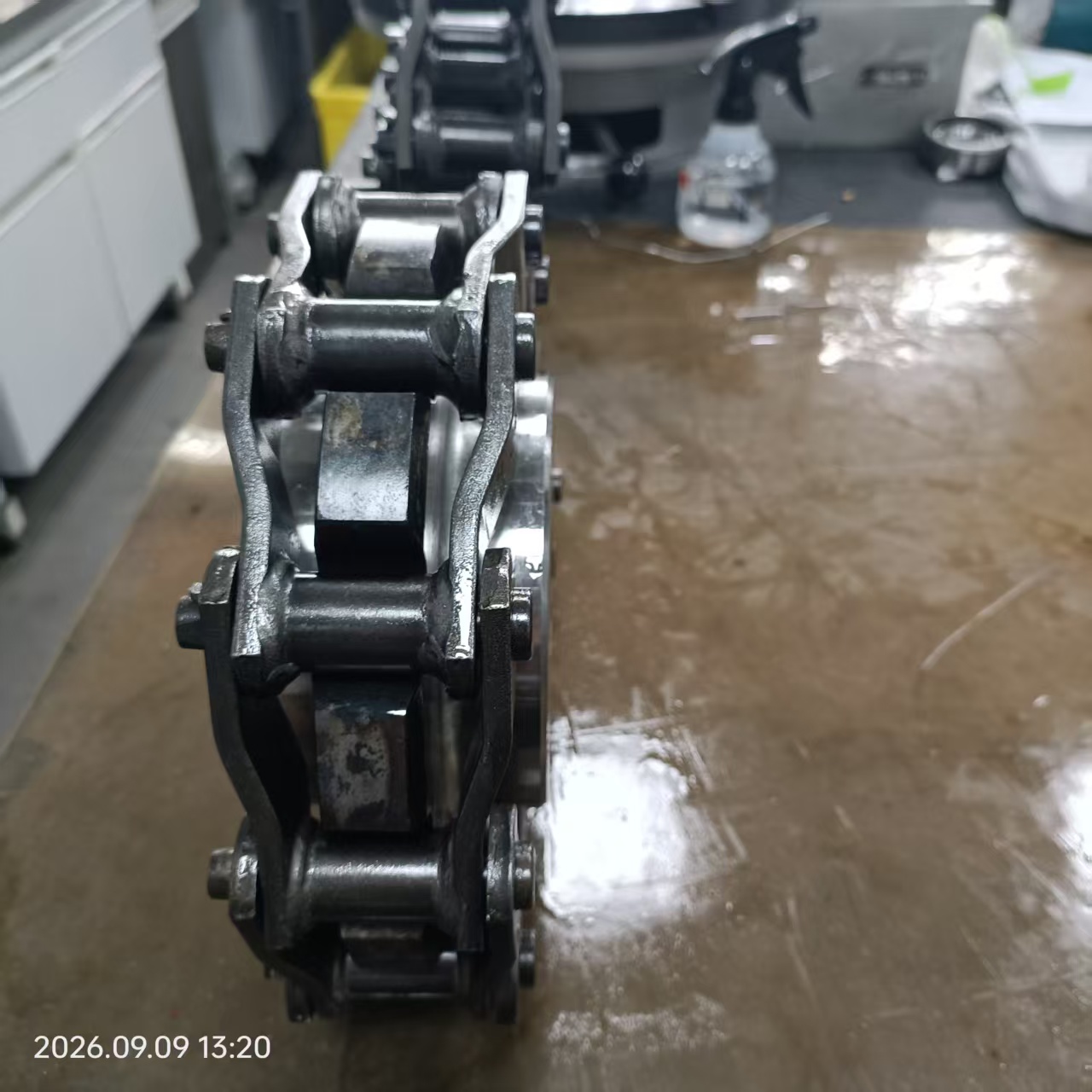
Conveyor downtime directly impacts facility throughput and overall profitability. When material handling systems unexpectedly halt, severe production bottlenecks immediately follow. Selecting the wrong chain series often leads to premature fatigue failure or unnecessary capital expenditure. For heavy industrial material handling, the welded steel conveyor chain remains the undisputed industry standard. However, choosing between the WR (Standard) and WH (Heavy-Duty) series entirely dictates your system's operational lifespan and maintenance intervals. Making the right choice requires carefully understanding your specific environmental demands. This article provides a clear, engineering-focused breakdown of WH and WR welded chain differences. You will learn exactly how to match chain specifications to your actual operational environments. We will thoroughly explore metallurgical profiles, ideal use cases, and replacement strategies to help maintenance and procurement teams optimize their conveyor reliability and performance.
Key Takeaways
WR Series (Standard): Engineered with heat-treated pins but standard carbon steel sidebars and barrels. Ideal for moderate-impact, general-duty applications.
WH Series (Heavy-Duty): Features fully heat-treated components (pins, sidebars, and barrels) for superior abrasion resistance and shock-load handling.
Cost vs. ROI: WH chains carry a higher upfront cost but deliver a significantly lower long-term operational expense in highly abrasive or high-impact environments.
Sprocket Compatibility: Both series typically operate on the same sprockets, making field upgrades to WH straightforward without requiring a complete drive overhaul.
The Shared Architecture of Welded Steel Conveyor Chains
Every rugged material handling system needs a reliable and robust backbone. Manufacturers build these critical chains using a proven, highly tested baseline construction. They feature precisely offset sidebars, heavily welded pins, and thick steel barrels. This specific and deliberate architecture makes the welded chain far superior to older cast iron alternatives. Cast chains frequently suffer from hidden internal voids or brittle metallic structures. Welded steel guarantees much higher structural integrity and highly predictable tensile strength. You can trust it to move heavy loads safely day after day.
This baseline performance delivers massive, clear advantages in the field. The unique welded construction inherently prevents dense material packing. Dirt, ash, and debris easily clear the open barrel design as it moves over the sprockets. They withstand severe directional tension much better than traditional riveted alternatives. Rivets tend to loosen under heavy mechanical vibration. Welded joints remain perfectly rigid and incredibly secure.
You will find this foundational design powering numerous heavy-duty industries globally. Common applications include:
Lumber and Forestry: Moving exceptionally heavy logs, rough lumber, and highly abrasive bark across long transfer decks.
Pulp and Paper: Transporting massive volumes of wet wood chips through continuous processing stages.
Grain Handling: Dragging massive volumes of heavy agricultural products through enclosed bucket elevators.
Wastewater Treatment: Operating heavy sludge collectors in highly corrosive, submerged environments.
Engineers favor this offset sidebar design because it simplifies assembly and repair. You do not need specialized connecting links to splice the chain together. Any link can serve as a connecting point. The welding process permanently fuses the pin into the sidebar. This fusion prevents pin rotation during operation. When a pin rotates, it destroys the sidebar pitch holes quickly. Welded steel effectively eliminates this specific failure mode entirely. Your maintenance crew spends less time fixing broken links and more time optimizing production.
WR Series: Specifications and Optimal Use Cases
The WR series firmly represents the industry standard for general-duty conveying systems. You must deeply understand its technical profile to deploy it correctly. Manufacturers engineer WR chains using a highly targeted, cost-effective metallurgical approach. They specifically heat-treat only the pins. This localized thermal processing hardens the pin surface to heavily resist internal joint wear. Meanwhile, the sidebars and barrels remain standard ductile carbon steel. This dual-material strategy keeps upfront manufacturing costs low while providing adequate strength.
This chain hits its operational sweet spot in forgiving, predictable environments. You should primarily use WR chains for non-abrasive materials. They perform exceptionally well under steady-state loads where sudden surges rarely happen. Controlled, sheltered environments maximize their expected operational lifespan. Standard drag conveyors, ash handling systems, and grain elevators represent perfect use cases. They move consistent, predictable volumes without sudden jams or extreme grit.
However, you face very specific limitation risks outside these ideal conditions. The WR series severely falls short in highly demanding or unpredictable applications. You will likely see rapid sidebar elongation if sudden shock loads occur. The standard carbon steel barrels also suffer from highly accelerated wear. Heavy grit, sharp silica sand, or sudden impacts quickly degrade the softer steel surfaces. Once the barrels wear thin, the chain loses its structural integrity. You will eventually face catastrophic breakage if you ignore these warning signs. Maintenance teams must carefully monitor WR chains running in borderline abusive environments.
WH Series: When to Upgrade to Heavy-Duty
When standard components fail prematurely, you absolutely need a stronger, more resilient solution. The WH series delivers vastly enhanced durability through an upgraded, premium technical profile. Manufacturers apply a rigorous full heat-treatment process to the entire chain assembly. They deeply harden the barrels, sidebars, and pins. This comprehensive thermal processing drastically increases overall surface hardness. It also massively boosts the overall fatigue strength of every single link. The standard steel transforms into a highly wear-resistant, battle-ready material.
You will find its true operational sweet spot in severe-duty industrial conditions. Upgrade to WH chains immediately when dealing with continuous high-impact loading. They handle intensely abrasive materials like furnace bottom ash, sharp silica sand, and rough raw timber effortlessly. Start-stop operations place incredibly heavy static loads on mechanical conveyor systems. The fully hardened sidebars heavily resist bending and permanent stretching under these intense physical demands. They power through jams that would normally snap a standard chain.
Framing the ultimate business case for WH chains requires looking far beyond initial purchase prices. You evaluate true success based on lifecycle extensions and operational uptime. Extending the mean time between replacements (MTBR) easily and quickly offsets the initial premium pricing. You spend much less capital on replacement parts over a five-year period. You also recover massive lost revenue by eliminating unscheduled production downtime. A dependable WH and WR welded chain upgrade strategy ensures your facility maintains maximum equipment availability.
Heavy-duty chains also provide a robust safety margin for aging conveyor systems. Sometimes, facility operators increase the motor horsepower to push more material. They fail to realize the original standard chain cannot handle the extra torque. The WH series acts as a vital insurance policy against operator error. It absorbs the extra punishment without failing abruptly. Your maintenance teams sleep better knowing the conveyor holds up during peak production seasons.
Head-to-Head Evaluation: WH and WR Welded Chain
Comparing these two distinct options requires a strict, objective evaluation framework. You must carefully look at how each chain fundamentally behaves under intense physical stress. We rely on three primary engineering metrics to determine the right fit.
Tensile Strength & Yield Point: Heat treatment directly increases the structural yield point. A WH chain handles significantly higher peak loads before permanent mechanical deformation occurs. Standard WR chains will permanently stretch and deform under the exact same extreme forces.
Abrasion Resistance: We measure this critical factor by closely looking at barrel wear rates. Heat-treated WH barrels deflect sharp, abrasive particles easily. Standard WR barrels scrape, gouge, and thin out much faster in heavily gritty environments.
Weight Considerations: Dimensional profiles remain largely identical between both the WR and WH series. You will see very minimal weight differences on the shipping manifest. However, the internal structural rigidity varies significantly due to the intensive heat-treating process.
You must carefully calculate the cost-to-outcome ratio for your specific facility. Evaluate the initial upfront cost strictly versus the hidden, compounding expenses of maintenance downtime. Cheaper chains always look highly attractive on a procurement purchase order. They quickly become incredibly expensive if they force early, unscheduled replacements. Labor costs for emergency weekend chain swaps destroy maintenance budgets. The right chain prevents these stressful financial surprises entirely.
Comparison Summary Chart
Feature / Specification
WR Series (Standard)
WH Series (Heavy-Duty)
Component Heat Treatment
Pins only
Pins, sidebars, and barrels
Yield Strength
Standard baseline
Significantly higher
Ideal Environment
Clean, steady-state, low-impact
Abrasive, start-stop, high-impact
Abrasion Resistance
Moderate
Excellent
Upfront Investment
Lower
Higher
Shock Load Capacity
Limited
Maximum durability
Implementation Risks and Replacement Considerations
Simply upgrading your chain does not automatically solve all your underlying conveyor problems. You must actively address several critical implementation risks during the installation process.
Sprocket wear realities often completely destroy new capital investments. Never run a brand new chain on severely worn or damaged sprockets. Hooked or deeply grooved sprocket teeth will engage the chain barrels incorrectly. This mismatched mechanical pitch rapidly accelerates chain elongation regardless of chain quality. Always thoroughly inspect and immediately replace worn drive components during a comprehensive chain swap.
Do not ever ignore proper lubrication and routine maintenance procedures. Heat-treated WH chains still strictly require proper lubrication protocols to survive. Hardened steel is absolutely not a magical substitute for proactive, daily maintenance. Industrial oil or grease prevents internal pin galling under heavy tension. It also physically flushes out trapped abrasive contaminants from the internal joints. A dry chain always dies early, regardless of its heat treatment.
Use this simple, effective shortlisting logic to finalize your purchasing decision:
Choose WR if: You are simply replacing an existing WR chain that consistently reaches its fully expected lifecycle. If it runs smoothly for years without premature failure, stick confidently to the standard series.
Choose WH if: You frequently experience frustrating sidebar bending. Select it if you constantly see rapid, uneven barrel flattening. Upgrade immediately if your current maintenance intervals are unacceptably short or unpredictable.
Many facilities adopt a hybrid approach for massive operations. They use WR chains on lighter, secondary transfer lines. They reserve the premium WH chains strictly for the brutal, primary intake conveyors. This balanced strategy optimizes the overall maintenance budget perfectly.
Conclusion
The ultimate choice between WH and WR series chains is purely an environmental and economic calculation. It is absolutely not a simple, one-size-fits-all answer. Your specific, daily material handling challenges dictate the right engineering solution. The WR series provides highly reliable, cost-effective performance for standard, predictable applications. The WH series delivers unmatched, rugged durability for the absolute harshest industrial environments.
Take immediate, decisive action to optimize your aging conveyor system today. First, thoroughly audit your current chain wear patterns to identify specific failure modes. Look closely for stretched sidebars or gouged barrels. Next, consult a qualified, experienced power transmission engineer to carefully review your operational loads. Finally, request a tailored, detailed quote based on your exact application parameters. Proactive, smart evaluation ensures your facility maximizes daily throughput and completely minimizes disruptive downtime.
FAQ
Q: Can I run WH chains on the same sprockets as my old WR chains?
A: Yes, dimensionally they share the exact same pitch and profile. However, you must carefully inspect your existing sprockets for wear before installation. Running a new WH chain on hooked or worn sprockets will quickly damage the new chain and void your investment.
Q: How much longer will a WH welded chain last compared to a WR chain?
A: The lifespan heavily depends on your specific environment. In highly abrasive or high-impact conditions, a WH chain can last two to three times longer than a standard WR chain. The fully hardened barrels and sidebars heavily resist the physical degradation that destroys standard chains.
Q: Are attachment configurations (like flight wings) the same for both series?
A: Yes, standard and custom attachments seamlessly fit both series. Manufacturers can easily weld standard flight wings or custom attachments to both WH and WR series sidebars. The welding process does not compromise the chain's structural integrity or its heat-treated properties.
As one of the largest manufacturers in the Chinese market of chain and power transmission components, our experience and adaptability are unparalleled.