Premature coupling wear is rarely “bad luck.” In most cases, it’s installation-related: misalignment left uncorrected, hub fit issues, incorrect gap, loose fasteners, or a simple mistake in how the elastic element is seated. With flexible couplings like the Normex Coupling NM Coupling, small installation errors can show up later as vibration, heating, rubber element cracking, bolt loosening, or uneven wear patterns. The coupling may still transmit torque, but it starts doing so inefficiently—and that’s when maintenance costs climb.
At Kasin Industries (Shanghai) Co., Ltd., we work with customers who use Normex NM couplings in pumps, compressors, fans, conveyors, mixers, and many other drive systems. Our experience is that a good coupling is only as good as its installation. When the coupling is installed with correct hub fit, correct spacing, controlled alignment, and proper torque practice, it delivers stable transmission and predictable service intervals. When installation is rushed, even high-quality couplings can wear early.
Why premature wear happens in Normex NM couplings
A Normex NM coupling typically uses:
two hubs
an elastomer “tire/ring” element (or segmented element, depending on design)
bolts and hardware that connect the element to the hubs
Because the elastomer element flexes to compensate for small misalignment and damp vibration, it can be damaged early if it is forced to compensate for too much misalignment or incorrect assembly conditions.
The most common early-wear causes include:
angular or parallel misalignment beyond allowable limits
incorrect axial gap / spacing
hub runout or improper hub mounting
bolt torque inconsistency (over or under torque)
contaminated contact surfaces (oil, dust, burrs)
element installed twisted or not seated evenly
operating conditions exceeding design (overload, shock, temperature)
Tools and prep checklist before you start
A clean, controlled installation environment is one of the easiest ways to avoid future problems.
Recommended tools
torque wrench (correct range for your fasteners)
feeler gauges (for gap checks)
straightedge or laser alignment tool
dial indicator (optional but helpful for runout)
soft mallet (for gentle seating)
cleaning solvent and lint-free cloth
anti-seize or threadlocker (only if recommended by your spec)
Pre-installation checks
confirm the NM coupling model and size matches your application
inspect elastomer element for shipping damage
check hubs for burrs, dents, or rust
confirm shaft key, keyway condition, and hub bore fit
verify the motor and driven machine are secured and base bolts tightened
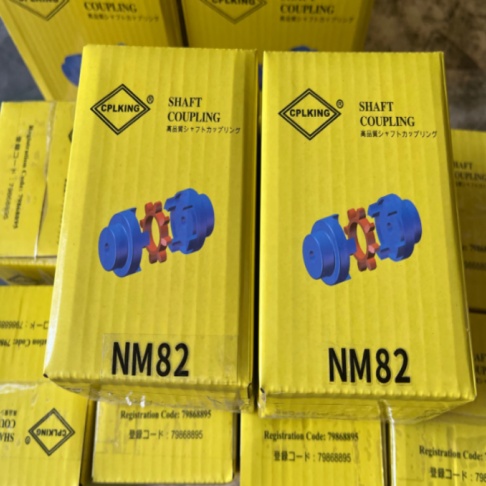
Step-by-step installation tips to avoid premature wear
Step 1: Confirm shaft condition and hub fit
Premature wear often starts with a hub that is not seated correctly.
Do:
clean shaft and hub bore thoroughly
remove burrs and sharp edges from keyway
check that hub bore tolerance matches the shaft tolerance
confirm the key fits correctly (not forcing, not loose)
Avoid:
hammering hubs aggressively onto shafts
using worn keys or damaged keyways
installing over dirt, rust, or oil film
A clean, correct fit reduces runout and prevents uneven coupling loading.
Step 2: Mount hubs to the correct axial position
Each hub must be mounted to the correct position so the coupling element will sit evenly.
Do:
follow the drawing or installation dimension for hub placement
check hub face position relative to shaft end
ensure both hubs are aligned to the same reference plane
Avoid:
Incorrect hub positioning often leads directly to incorrect coupling gap.
Step 3: Set the correct coupling gap (axial spacing)
The coupling gap is not “optional.” It directly affects how the elastomer flexes.
Do:
set the specified distance between hub faces
measure at multiple points around the circumference
ensure the gap is consistent (no tilt)
Avoid:
A wrong gap can cause constant elastomer stress, heating, and early cracking.
Step 4: Perform alignment before installing the elastomer element
A flexible coupling compensates for small misalignment, but it is not a cure for poor alignment.
Do:
align the shafts as accurately as possible
check parallel (offset) alignment
check angular alignment
verify soft foot and base stability
Best practice:
align under realistic conditions (machine anchored, base bolts tight)
if possible, account for thermal growth in hot-running machines
Avoid:
Good alignment is the biggest wear-life driver for NM couplings.
Step 5: Install the elastomer element evenly
When installing the coupling element, the goal is symmetry and even seating.
Do:
ensure the element sits flat and centered
avoid twisting the rubber ring
check that bolt holes align naturally (no forced stretching)
install hardware loosely first, then tighten gradually in sequence
Avoid:
forcing the element into position with bolts
pinching the rubber between faces
installing with oil-contaminated surfaces (unless your element is designed for it)
Uneven seating creates localized stress and early element fatigue.
Step 6: Tighten bolts with correct torque and pattern
Bolt practice is a common hidden cause of premature wear.
Do:
use a torque wrench
tighten bolts in a cross or star pattern
tighten in stages (e.g., 30% → 60% → 100% of final torque)
verify all bolts reach the same torque
Avoid:
impact tools for final tightening
fully tightening one bolt at a time around the circle
ignoring washer orientation or missing hardware
Incorrect torque can cause slippage, heat, vibration, and uneven load transfer.
Step 7: Final inspection and hand-rotation check
Before start-up, verify the assembly behaves smoothly.
Do:
rotate the coupling by hand (if safe and permitted)
verify no rubbing, interference, or binding
re-check gap and visible alignment marks
confirm guards can be installed without contact
Avoid:
Small mechanical interference often becomes big damage at operating speed.
Step 8: Start-up and early monitoring (first hours matter)
Premature wear often shows up in the first shift.
Do:
run at low load first if possible
listen for abnormal noise
check for vibration changes
check for abnormal heating around the coupling
after initial run, re-check bolt torque if your procedure requires it
If you see early dusting, smell, or heat, stop and check alignment and gap again.
Table: Installation mistakes and the wear symptoms they cause
Installation mistake |
Typical symptom |
Likely wear outcome |
Excess misalignment |
vibration, uneven element deformation |
early elastomer cracking |
Wrong coupling gap |
heating, constant stress |
shortened element life |
Uneven bolt torque |
vibration, noise, bolt loosening |
hub/element damage |
Dirty hub/shaft fit |
runout, wobble |
uneven loading and fatigue |
Element forced into place |
localized tearing |
premature failure |
Practical tips to extend coupling life after installation
keep coupling guards clean and ventilated
avoid chemical splash on elastomer elements
monitor vibration trends; rising vibration often signals alignment drift
check base bolts and soft foot during maintenance intervals
replace elastomer elements before catastrophic failure if wear is visible
A Normex NM coupling is designed to be service-friendly—planned element replacement is far cheaper than a breakdown.
Our approach at Kasin Industries (Shanghai) Co., Ltd.
At Kasin Industries (Shanghai) Co., Ltd., we focus on coupling reliability through correct application matching and practical installation guidance. In our experience, the fastest way to avoid premature wear in a Normex Coupling NM Coupling is to treat installation as a controlled process: correct hub fit, correct gap, accurate alignment, and disciplined torque practice. When these basics are done right, the coupling delivers stable torque transmission and predictable service intervals across pumps, fans, conveyors, and many industrial drives.
If you can share your drive type, motor power, operating speed, and coupling size, we can help recommend practical setup priorities and maintenance checkpoints for your application.
Conclusion
A Normex Coupling NM Coupling is built to handle vibration and small misalignment—but it cannot compensate for poor installation. To avoid premature wear, focus on the fundamentals: clean hub fit, correct hub position, correct coupling gap, accurate shaft alignment, even element seating, and torque-controlled bolt tightening. These steps reduce unnecessary elastomer stress, improve stability, and extend coupling service life.
To learn more about Normex NM coupling options and application support, you are welcome to contact Kasin Industries (Shanghai) Co., Ltd. for more information.
FAQ
1) What is the most common cause of premature wear in a Normex NM coupling?
Misalignment and incorrect gap setup are among the most common causes, because they force the elastomer element to flex beyond its intended range.
2) Do flexible couplings like NM couplings eliminate the need for alignment?
No. They tolerate small misalignment, but accurate alignment is still essential for long service life and low vibration.
3) Should I use an impact wrench to tighten NM coupling bolts?
It is better to use a torque wrench for final tightening to ensure consistent torque and avoid uneven loading.
4) How do I know if my NM coupling is wearing too fast?
Signs include rising vibration, abnormal heat, rubber dusting, cracking, or uneven deformation of the elastomer element during operation.