When customers ask us about a Normex Coupling NM Coupling, they’re usually not asking out of curiosity—they’re trying to solve a real problem: vibration that won’t go away, a motor and pump that keep eating bearings, a gearbox that runs louder than it should, or a maintenance team that’s tired of re-aligning shafts. In industrial power transmission, the coupling is often treated as a “small accessory,” yet it sits right in the middle of the drivetrain. If it’s chosen well and installed correctly, the whole system feels smoother and more forgiving. If it’s mismatched or assembled poorly, small issues become repeated failures.
In our day-to-day work, we see the same pattern: people know they need “an elastic coupling,” but they are not always sure what makes the Normex Coupling NM Coupling different, how its components share the load, and what “works” really means in a practical sense. This article explains the structure, the working principle, and the selection logic in plain language—so you can make decisions that improve reliability, not just “fit the shaft diameter.”
What Exactly Is a Normex Coupling NM Coupling
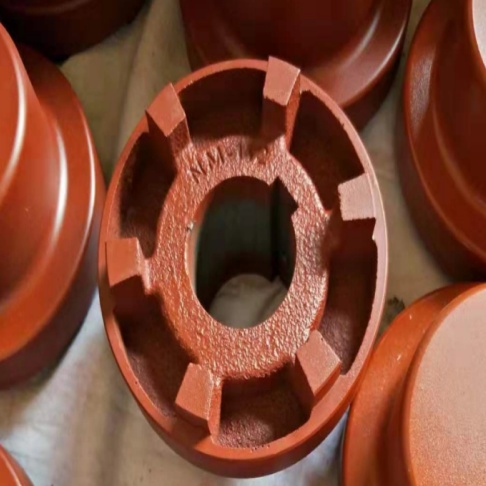
A Normex Coupling NM Coupling is a type of elastic jaw coupling (also commonly called a claw coupling). In simple terms, it is:
Two metal hubs (one on the driving shaft, one on the driven shaft)
One elastomer element in between (rubber/elastic ring or insert), which transmits torque while absorbing shock and vibration
The elastomer is the “heart” of the coupling. Instead of metal-to-metal contact, torque is transferred through a flexible medium. This is why this coupling is popular in applications like:
Motor + pump sets
Motor + gearbox
Fans, compressors, mixers
Conveyors and general industrial drives
Why This Coupling Exists in the First Place
Real machines are rarely perfect. Even with careful alignment, shafts can move due to:
thermal expansion
foundation settling
load changes
installation tolerance
bearing wear over time
A rigid coupling forces the shafts to behave like one solid piece. That can sound good, but it often pushes misalignment loads into bearings and seals.
The Normex Coupling NM Coupling exists to do three jobs at the same time:
How a Normex Coupling NM Coupling Works
The working principle in plain language
Think of the elastomer element as a tough “springy buffer.” When the motor turns, the first hub pushes against the elastomer. The elastomer compresses slightly, then pushes the second hub, which turns the driven machine.
So the torque path is:
Because the elastomer can deform slightly, it can:
What happens under different operating conditions
1 During steady running
Torque transfers continuously. The elastomer holds shape and behaves like a firm elastic bridge.
2 During start-up or sudden load changes
The elastomer compresses a bit more, absorbing some shock. That reduces peak stress on shafts, keys, and bearings.
3 When misalignment exists
Instead of forcing the shafts into a rigid line, the elastomer compensates by deforming locally. This reduces harmful reaction forces.
Key Components and Their Roles
Component | What it does | Why it matters |
Driving hub | Connects to motor shaft and provides drive interface | Correct bore/keyway fit prevents fretting and slip |
Driven hub | Connects to pump/gearbox shaft and receives torque | Hub material and machining accuracy affect balance and life |
Elastomer element | Transfers torque elastically and absorbs shock | Material selection impacts temperature resistance and durability |
Fastening method | Keeps hubs fixed to shafts (key, set screw, clamp) | Improper fastening causes hub movement and shaft damage |
What Problems a Normex Coupling NM Coupling Helps Reduce
From a practical maintenance perspective, these are the benefits people actually notice:
Reduced vibration transmission
If your motor produces vibration (or the driven machine creates pulsations), an elastic coupling can reduce how much of that vibration reaches the other side.
Shock absorption
Common in pumps that see sudden pressure changes, mixers that hit load peaks, or conveyors with frequent starts/stops.
Better tolerance to installation realities
Even good alignment tools cannot eliminate every deviation. Elastic couplings provide a workable safety margin.
Lower stress on bearings and seals
Misalignment loads are a major hidden cause of bearing failures. A coupling that tolerates minor misalignment can help extend component life—especially in real-world conditions.
Misalignment Types Explained Simply
Misalignment is not one single thing. Understanding the types helps avoid wrong expectations.
Misalignment type | What it looks like | Common cause |
Angular | Shafts meet at an angle | Mounting surface not level |
Parallel (radial) | Shafts are offset but parallel | Base shift, loose feet |
Axial | Shaft ends move closer/farther | Thermal expansion, thrust load |
A Normex Coupling NM Coupling can tolerate limited misalignment, but it is not a substitute for proper alignment. Think of it as “protection and forgiveness,” not “permission to ignore alignment.”
How to Choose the Right Normex Coupling NM Coupling
Selection is not just about shaft diameter. In our experience, a reliable selection process checks torque, speed, duty cycle, environment, and misalignment expectations.
1 Start with torque, not just power
Power (kW) and speed (rpm) together determine torque. If you only match bore size, you risk under-sizing.
Consider:
2 Confirm speed and balance needs
At higher speeds, balance and concentricity matter more. Coupling size and quality of machining influence vibration behavior.
3 Select elastomer material based on environment
Elastomers behave differently in:
high temperature
oil exposure
chemical atmosphere
outdoor UV exposure
If the coupling is near oil mist or hot equipment, the wrong elastomer can harden, crack, or lose elasticity.
4 Check installation constraints
Some drives have limited space for hub length or require easy element replacement without moving equipment.
A Simple Selection Checklist
Question | Why it matters |
What is the motor power and speed | Determines baseline torque |
What type of load (pump, fan, compressor, mixer) | Defines shock factor |
Any frequent start/stop or reversing | Increases fatigue on elastomer |
Operating temperature range | Affects elastomer life |
Any oil/grease/chemical exposure | Material compatibility |
Shaft sizes and keyway standards | Fit and interchangeability |
Maintenance preference | Some want easy element replacement |
Installation Tips That Prevent Most Early Failures
Most coupling complaints are not “bad product” issues—they are installation and alignment issues. Here are the habits we recommend:
Keep alignment within acceptable limits
Elastic does not mean “misalignment-proof.” Excess misalignment leads to:
overheated elastomer
accelerated wear
vibration and noise
hub damage
Maintain consistent hub gap and positioning
The element must sit properly between hubs. Incorrect axial spacing can cause uneven loading.
Tighten hub fastening correctly
Loose hubs can creep on the shaft and damage keys and bores.
Avoid “forcing” assembly
If the coupling needs hammering to fit, something is wrong (bore tolerance, burrs, shaft damage).
Maintenance and When to Replace the Elastomer
The elastomer is a wear component. Replacement is normal and predictable—if you monitor the right signs.
Replace the elastomer if you see:
cracks or chunks missing
hardening or loss of elasticity
permanent deformation
abnormal coupling noise during start/stop
sudden increase in vibration trend
A healthy approach is to treat the elastomer like a “planned spare,” especially in critical pumps or continuous-process lines. This is often cheaper than emergency downtime.
Final Thoughts
A Normex Coupling NM Coupling is easy to overlook, but it plays an outsized role in how smooth, quiet, and reliable a drive system feels. Its working principle is straightforward—two hubs transmit torque through an elastomer element—but the results can be significant: reduced shock, reduced vibration transfer, and better tolerance to small alignment changes that happen in real factories. The key is choosing the right size and elastomer for your torque and environment, then installing it with alignment discipline.
At Kasin Industries (Shanghai) Co., Ltd., we work with customers who use Normex Coupling NM Coupling solutions in pumps, gearboxes, fans, and many other industrial drives. If you’d like help confirming sizing logic, elastomer material suitability, or matching a coupling to your motor and driven equipment, you’re welcome to reach out to us to discuss your operating conditions and application goals.
FAQ
1) What is a Normex Coupling NM Coupling used for
A Normex Coupling NM Coupling is commonly used to connect a motor to a pump, gearbox, fan, or compressor while helping reduce vibration, absorb shock loads, and tolerate limited shaft misalignment.
2) How does a Normex Coupling NM Coupling work
It works by transferring torque from the driving hub to the driven hub through an elastomer element. The elastomer deforms slightly under load, which helps damp vibration and cushion torque spikes.
3) Can a Normex Coupling NM Coupling compensate for misalignment
Yes, it can compensate for small angular, parallel, and axial misalignment. However, it is not a replacement for proper alignment—excess misalignment can shorten elastomer life and increase vibration.
4) When should I replace the elastomer in a Normex Coupling NM Coupling
Replace it if you see cracks, hardening, missing pieces, permanent deformation, or if vibration and noise increase noticeably. In critical equipment, keeping spare elements for planned replacement is recommended.