Track and drive units usually steal the spotlight during equipment design. However, hanger failure represents the leading cause of track misalignment, premature wear, and catastrophic equipment crashes. A high-performing Overhead Conveyor System relies completely on its weakest support point to maintain continuous operation. Hangers serve as a critical engineering bridge. They seamlessly connect static facility infrastructure to highly dynamic production loads. Under-engineering these suspension components directly compromises workplace safety and invites severe operational accidents. Over-engineering them inflates initial capital expenditures unnecessarily without adding real structural value. This guide offers a pragmatic, engineering-backed framework. We will help you evaluate, calculate, and select the exact hanger support structures needed for your operations. You will learn practical methods to optimize overhead material handling safely and efficiently from start to finish.
Key Takeaways
Hanger selection must account for both static (dead) loads of the track and dynamic (live) loads of the product and chain.
Facility architecture (ceiling joists vs. floor supports) dictates whether you need direct mounting, header steel, or freestanding "goal post" structures.
Specific enclosed track systems—like the ETC-5000 Enclosed Track Conveyor vs. the ETC 7000 Series Conveyor—require distinct hanger spacing and sway bracing strategies based on their varying load capacities.
Bolted hanger assemblies offer superior post-installation adjustability compared to welded connections, reducing long-term maintenance costs.
Assessing Facility Infrastructure and Mounting Constraints
You cannot simply guess structural integrity when suspending heavy machinery overhead. Facility architecture ultimately dictates your mounting strategy. Before purchasing any hardware, you must understand exactly what your building can support safely.
Structural Audits
A licensed structural engineer must evaluate your facility’s roof or ceiling before specifying any hanger attachments. Building structures settle over time. Environmental factors like seasonal snow loads change weight limits dynamically. Dynamic loads transmit continuous vibrations directly into the building frame. An engineer will analyze shear stress and tensile strength to ensure your roof trusses can handle these repetitive forces safely.
Attachment Points
We see distinct differences between attaching to I-beams, bar joists, and concrete ceilings. I-beams provide the most robust direct clamping points. They easily accept heavy-duty beam clamps without requiring destructive drilling. Bar joists require careful load distribution. You must avoid bending the delicate lower chords of a bar joist. Concrete ceilings often demand heavy-duty wedge anchors or epoxy-set bolts. These concrete anchors must penetrate deeply enough to prevent pull-out under heavy vibration.
Header Steel Utilization
Sometimes existing building joists do not align perfectly alongside your necessary track routing. Here, you must use secondary structural steel. Industry professionals call this header steel. Header steel bridges the empty gaps between primary structural members. It creates a continuous, rigid mounting surface exactly where you need it. Using header steel prevents awkward angled hanger drops, ensuring vertical rods remain perfectly plumb.
Floor-Supported Alternatives
Ceiling support is not always possible. Older buildings frequently lack sufficient roof load capacity. When ceilings fail structural audits, freestanding floor supports become your mandatory fallback. We often build "goal post" style floor supports. A goal post features a horizontal steel beam supported by two vertical columns bolted directly into the concrete slab. This method transfers all heavy loads safely down to the foundation.
Matching Hanger Configurations to the Track Type
Different track profiles require different suspension strategies. You must match your hanger configuration to the specific mechanical demands of your chosen equipment.
Standard Enclosed Track Hangers
Standard ceiling sway hangers and vertical drop rods handle moderate weights easily. They feature simple designs engineered for rapid installation. These components typically use threaded rods attached to C-channel brackets. They provide excellent vertical support while allowing minor lateral flexibility during initial alignment.
Application fit: These lighter components are ideal for standard manufacturing loads utilizing an ETC-5000 Enclosed Track Conveyor. This setup supports garment handling, light assembly, and powder coating lines efficiently. The standard hangers easily manage the steady, predictable loads of these lightweight operations.
Heavy-Duty and Multi-Tiered Hangers
Heavier setups demand heavy-duty angle iron mounts. They utilize reinforced structural steel rather than simple threaded rods to manage immense physical stress. We often design multi-tiered hangers to support parallel tracks stacked vertically. This maximizes vertical space utilization in crowded plants.
Application fit: High-capacity applications demand these rugged setups. You will need them when running an ETC 7000 Series Conveyor or robust Power and Free systems. Heavy metal parts, foundry lines, and automotive assembly operations require this enhanced stability to prevent dangerous equipment failure.
Sway Bracing Fundamentals
Chain pull creates significant lateral and longitudinal forces. Sway bracing neutralizes these dynamic shifts effectively. Lateral bracing prevents the track from swinging side-to-side. Longitudinal bracing stops the track from swaying front-to-back.
You must install lateral and longitudinal sway bracing at critical junctions. Place them at corners, elevation changes, and drive unit locations. Drive units exert massive linear force on the track. Without rigid sway bracing, the track shifts out of alignment quickly. This shifting causes the internal chain to bind, leading to immediate drive motor overloads.
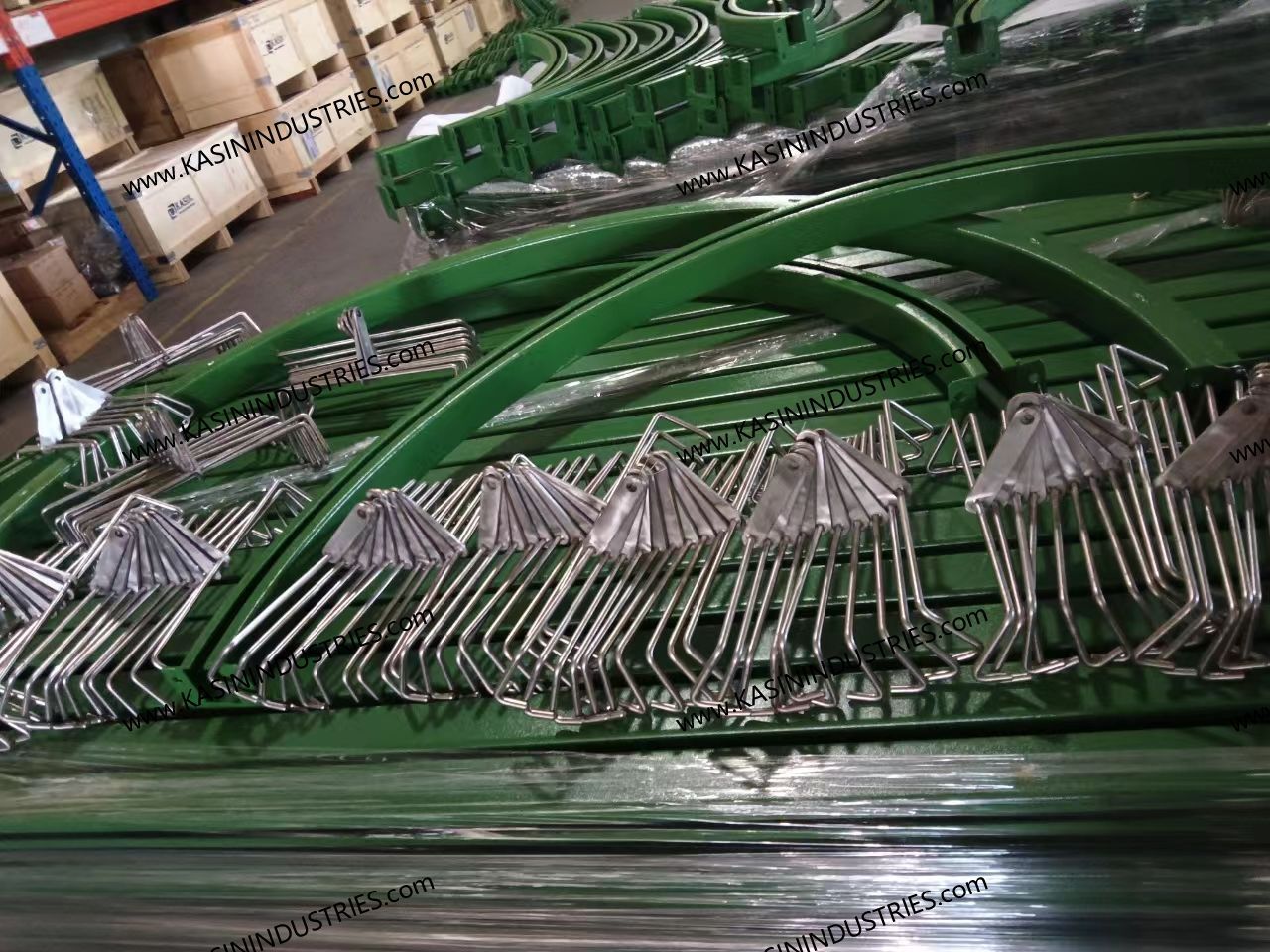
Calculating Critical Load, Span, and Drop Variables
Precision engineering separates successful installations from dangerous liabilities. You must calculate loads, spacing, and drop lengths meticulously.
Dead Load vs. Live Load
You need a strict framework for calculating total weight. Engineers divide this into dead load and live load. Dead load includes the static weight of the track itself. It also includes splices, hanger components, and any attached sensors. Live load encompasses the dynamic weight in motion. It adds the chain, pendants, carriers, and the maximum possible product payload together. You must design your hanger supports to handle the combined maximum sum of both loads simultaneously.
Hanger Spacing Rules
Correct spacing prevents track deformation. Spacing rules change depending on the track geometry.
Straight Sections: Establish an industry-standard baseline spacing. We typically place hangers every 5 to 10 feet along straight, flat runs.
Horizontal Curves: Spacing tightens considerably around horizontal curves. Accumulated chain tension acts as a radial force, pulling the track inward. You must place hangers every 2 to 3 feet here.
Vertical Curves: Inclines and declines multiply forces on the track joints. Spacing must tighten to 2 to 3 feet to prevent the track from bowing under upward or downward tension.
Drop Length Realities
We must address the pendulum effect in physics. Drop length means the distance from the ceiling attachment to the top of the track. Longer drops generate more leverage against the top attachment point. A 10-foot drop requires much more rigid sway bracing than a 2-foot drop. The longer the drop, the greater the potential for sway. Rigid bracing prevents dangerous track oscillation during operation.
Hanger Drop Length and Sway Bracing Requirements
| Drop Length (Inches) | Required Suspension Material | Sway Bracing Rigidity Required |
| 0 - 18 inches | Standard Threaded Drop Rod | Minimal. Brace only at drives and corners. |
| 19 - 36 inches | Heavy-Duty Threaded Rod or Pipe | Moderate. Brace at corners, drives, and long straightaways. |
| 37 - 72+ inches | Welded Angle Iron or Structural Tubing | Maximum. Continuous X-bracing required throughout the layout. |
Installation Realities: Welded vs. Bolted Assemblies
Choosing between welded and bolted assemblies impacts your installation timeline and future maintenance routines heavily.
Welded Connections
Welding provides a highly permanent structural bond. Many older facilities rely entirely on welded hanger systems.
Pros: Weldments offer permanent, high rigidity. They eliminate the risk of hardware vibrating loose over time. They generally present a lower upfront component cost because raw steel costs less than specialized clamping hardware.
Risks: Welding requires strict hot work permits. It poses serious fire hazards in operational plants. Welded joints lack adjustability completely if the building settles. Modifying them during a future system expansion requires grinding, cutting, and repainting. This creates immense dust and halts production completely.
Bolted Connections / Clamps
Modern installations favor bolted hardware and beam clamps. They offer incredible flexibility during installation.
Pros: Bolted hardware is highly adjustable. You achieve precise track leveling easily during commissioning. It allows for easier modular expansion. Installation remains perfectly clean, free of dangerous sparks and toxic fumes.
Risks: Bolted systems require periodic torque-check maintenance. Vibration from daily operation can loosen threaded hardware over time. Neglecting routine torque checks invites sudden component failure.
Best Practices for Bolted Assemblies:
Always use nylon-insert lock nuts or heavy-duty lock washers on every threaded connection.
Mark torqued bolts visibly using a paint pen. This allows maintenance teams to spot backed-out bolts visually.
Establish a mandatory 90-day torque verification schedule for the first year of operation.
A Step-by-Step Decision Framework for Procurement
Procuring the right hanger hardware requires a systematic approach. Follow this step-by-step framework to ensure you purchase the correct structural components.
Step 1: Define the Load Profile. Map your maximum carrier weight accurately. Outline specific track specifications. Decide if a standard Enclosed Track Conveyor suffices or if heavy-duty structural track is mandatory. Document the exact weight of your heaviest product.
Step 2: Conduct a Facility Structural Review. Obtain formal blueprint sign-off. A structural engineer must certify allowable roof loads. Provide them your exact live load and dead load calculations. Never skip this legal requirement.
Step 3: Map Track Routing. Identify every curve, incline, and drive unit on a CAD drawing. Reinforced bracing remains non-negotiable at these high-stress nodes. Calculate exactly how many linear feet of header steel you will need to cross unsupported ceiling gaps.
Step 4: Request Detailed Integration Quotes. Force your integrators to separate line items. Require distinct pricing for hanger material, header steel, and installation labor. This transparency lets you compare vendor bids objectively. It prevents integrators from hiding exorbitant installation labor costs inside the hardware pricing.
Conclusion
Hangers form the crucial structural backbone of your overhead layout. While chains and drives power the movement, the hanger system absorbs every ounce of dynamic stress. Proper engineering and specification prevent metal fatigue and track warping. Diligent hanger selection ensures strict OSHA compliance and protects your overarching capital investment.
Consult a qualified systems integrator immediately to discuss your specific layout. Engage a structural engineer simultaneously to verify your roof load capacities. Begin mapping your facility capabilities directly against your desired throughput loads today to ensure a safe, reliable installation.
FAQ
Q: What is the standard hanger spacing for an enclosed track conveyor?
A: Standard spacing typically ranges between 5 to 10 feet along straight sections. However, you must implement tighter spacing around horizontal and vertical curves. Accumulated chain tension at curves demands hanger placement every 2 to 3 feet to prevent dangerous track deformation.
Q: Can overhead conveyor hangers be attached directly to roof decking?
A: No, you should never attach hangers directly to corrugated roof decking. Decking lacks the structural integrity to support dynamic point loads safely. You must mount hangers to primary building structures, such as I-beams, or use secondary header steel to bridge gaps safely.
Q: How does the ETC 7000 Series Conveyor impact hanger choice compared to lighter systems?
A: The ETC 7000 Series carries significantly heavier live loads. This requires heavier gauge steel hangers and thicker drop rods. You often need double-hanger configurations at splice joints. Additionally, it demands stricter sway-brace tolerances to counteract the aggressive momentum of heavier moving parts.
Q: What is sway bracing, and where is it required?
A: Sway bracing consists of rigid steel members installed laterally and longitudinally to stabilize the track. It counteracts the continuous pull of the moving chain. You must install sway bracing at all elevation changes, corners, drive units, and across any unusually long straightaways.