Excessive noise and vibration in manufacturing facilities often register merely as background annoyances to busy operators. However, you should view these persistent acoustic signals as leading indicators of severe mechanical degradation and potential regulatory compliance liabilities. Moving heavy loads overhead inherently creates friction and operational sound across the factory floor. Yet, sudden acoustic spikes and rhythmic harmonic vibrations typically indicate dangerous track misalignment, critical component wear, or improper engineering specification. If you ignore these physical warning signs, structural fatigue and catastrophic failure inevitably follow.
This comprehensive guide focuses on moving your facility from reactive maintenance patching to structured acoustic and structural mitigation. We will explore how you can effectively balance upfront engineering interventions against long-term operational stability. You will learn to implement permanent, data-driven solutions rather than relying on superficial, temporary fixes to keep your facility running safely and efficiently.
Key Takeaways
Root Cause First: Vibration and noise usually stem from worn Overhead Conveyor Chain links, misaligned tracks, or inadequate lubrication, not just heavy loads.
Engineering Over PPE: Permanent noise mitigation relies on component upgrades (e.g., nylon wheels, isolators) rather than just masking the problem with ear protection.
Predictive Power: Modern mitigation pairs physical upgrades with vibration analysis sensors to detect anomalies before they cause audible failures.
System Nuance: Solutions differ vastly depending on whether the facility runs a heavy-duty I-beam setup or a lighter Enclosed Track Conveyor.
The Business Cost of Unchecked Conveyor Noise and Vibration
Industrial noise pollution extends far beyond worker discomfort. It directly impacts your bottom line, legal standing, and equipment reliability. Understanding these hidden costs helps justify the necessary capital expenditure for acoustic and structural upgrades.
Compliance and Industrial Hygiene
Regulatory bodies strictly monitor industrial noise levels to protect worker hearing. The Occupational Safety and Health Administration (OSHA) enforces a Permissible Exposure Limit (PEL) of 90 dB(A) over an 8-hour Time-Weighted Average (TWA). However, the American Industrial Hygiene Association (AIHA) strongly recommends a more conservative 85 dB(A) action level. When a busy Overhead Conveyor System pushes facility noise past these thresholds, managers must mandate personal protective equipment (PPE) and implement hearing conservation programs. Relying solely on earplugs shifts the burden onto the worker. Proper industrial hygiene demands engineering controls at the source to physically eliminate the hazard.
Mechanical Fatigue and Asset Lifespan
Audible noise usually represents wasted energy manifesting as vibration. Continuous harmonic vibration accelerates micro-fractures in structural supports, hangers, and load-bearing joints. Over months of constant operation, these tiny fractures expand. They degrade drive units prematurely, misalign sprockets, and compromise the structural integrity of your facility roof trusses. By allowing severe vibrations to persist, you inadvertently reduce the functional lifespan of every connected mechanical asset on the factory floor.
Success Criteria for Mitigation
A successful mitigation project requires clear, measurable goals. You cannot simply aim for "quieter" operations. Instead, establish hard metrics before initiating any retrofits. We recommend targeting three specific criteria:
Acoustic Reduction: Lowering the operational ambient noise to consistently below 85 dB(A) to eliminate strict PPE requirements.
Operational Uptime: Achieving a measurable reduction in unscheduled downtime incidents related to track or drive failures.
Product Quality: Eliminating erratic product sway or damage caused by jerky, vibrating carriers navigating turns.
Skeptical Note on "Silent" Operation
While engineering controls drastically reduce acoustic footprints, you must set realistic expectations. Moving thousands of pounds of steel across rigid tracks will never be entirely silent. Physics dictates some level of friction and sound generation based on load weight, travel speed, and material density. Avoid vendors promising absolute silence. Focus instead on eliminating damaging frequencies and bringing the decibel output into safe, compliant ranges.
Conveyor Noise Impact Summary
| Exposure Level (dBA) | Regulatory Action Required | Equipment Degradation Risk | Recommended Intervention |
| Under 80 | None | Low | Routine visual inspections. |
| 80 - 85 | Monitor closely | Moderate | Targeted lubrication and alignment. |
| 85 - 90 | Mandatory hearing conservation | High (Vibration fatigue likely) | Hardware retrofits and isolators. |
| Over 90 | Mandatory PPE and limits | Severe (Imminent failure risk) | Full system audit and component overhaul. |
Diagnostic Framework: Locating the Source of the Disturbance
Effective noise reduction requires precise diagnostics. Haphazardly applying lubrication or swapping parts wastes time and budget. You must deploy a structured diagnostic framework to pinpoint the exact origin of acoustic anomalies.
Visual and Acoustic Inspection
Your first line of defense involves a systematic manual walkthrough. Walk the entire line during normal operational speeds. Listen carefully and categorize the specific sounds you hear. Different noises indicate entirely different mechanical failures. Consider these common acoustic signatures:
High-Pitched Squeals: These typically point to severe friction issues, usually resulting from depleted lubrication inside trolley bearings or tight horizontal curves.
Deep Grinding: This alarming sound signifies metal-on-metal wear. It often happens when carriers drag against structural guards or when bearings completely fail.
Rhythmic Rattling: Loose chain tensioners, damaged track splices, or unbolted hanger brackets generate this distinct clattering noise.
Vibration Analysis (Condition Monitoring)
Human ears cannot detect every destructive frequency. Condition monitoring utilizes specialized sensors to capture baseline vibration spectrums. By analyzing this data, technicians identify specific fault frequencies. Every rotating component generates a unique vibrational signature. For example, a bearing defect produces a distinct high-frequency peak on a spectrum analyzer. Structural resonance, conversely, shows up as a low-frequency, high-amplitude wave. Advanced vibration analysis allows you to differentiate between a failing drive motor and a poorly supported track section.
Evaluating Component Wear
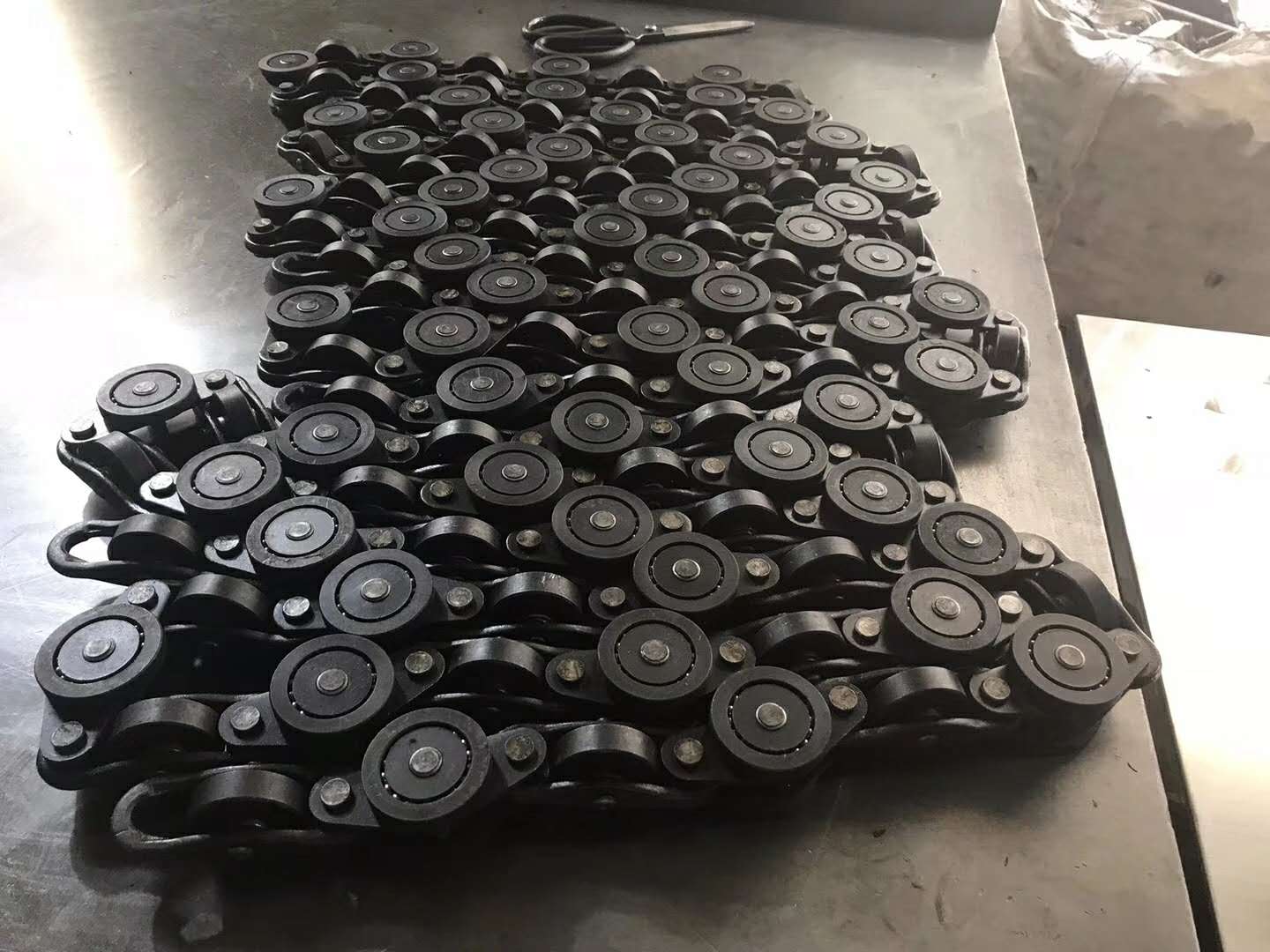
Regular component inspections remain crucial for long-term health. When inspecting an Overhead Conveyor Chain, check for elongated pitches, cracked side links, and excessive pin wear. Examine drive sprockets for "hooked" teeth, which cause the chain to catch and release violently, sending shockwaves down the line. Diagnosis methods change based on your architecture. Open I-beam tracks allow easy visual inspection of trolley wheels and flanges. In contrast, diagnosing an Enclosed Track Conveyor requires you to rely heavier on acoustic signatures and inspection ports, as the rolling components remain hidden from direct view.
Core Engineering Controls and Hardware Retrofits
Once you identify the root causes of the disturbance, you must implement physical solutions. Administrative controls only delay the inevitable. Core engineering controls directly alter the physical properties of your equipment to eliminate the source of the noise.
Component Upgrades for Direct Impact
Swapping out standard hardware for acoustically optimized components yields the most immediate decibel reductions. Facilities often rely on traditional forged steel wheels for durability. However, steel rolling on steel generates immense noise. Consider substituting steel trolley wheels with urethane-coated or solid nylon alternatives. These softer materials absorb micro-impacts against the track, delivering an immediate drop in overall ambient noise. While they may have lower load capacities than steel, they drastically improve the acoustic environment.
Structural resonance poses another major challenge. Track systems bolted directly to steel roof trusses transfer vibrations throughout the entire building architecture. You can disrupt this transmission path by installing vibration isolators. Placing engineered rubber or neoprene mounting pads between the hanger brackets and the building superstructure absorbs the kinetic energy. This simple retrofit prevents the building frame from acting as a giant acoustic amplifier.
System-Specific Modifications
Different architectures require tailored mitigation strategies. High-friction zones, such as complex elevation changes or tight radius turns, generate disproportionate noise levels. If your facility runs lightweight to medium loads on open I-beams, consider converting those specific turbulent zones to an Enclosed Track Conveyor format. The enclosed tubular design inherently dampens acoustics by trapping the sound of the rolling hardware inside the steel profile.
For continuous loop setups, friction management is paramount. If you operate a heavy-duty Monorail Conveyor, manual lubrication schedules often fall short, leading to dry runs and intense squealing. Implement automated, precision-drip lubrication systems at the drive units. These systems apply microscopic amounts of specialized oil directly to the chain pins during operation. This maintains a constant, optimal friction coefficient, virtually eliminating squeals without risking product contamination from excess dripping grease.
Material Dampening Strategies
Sometimes, the track itself is not the primary noise source. Large sheet-metal safety guards, drive unit enclosures, and drip pans often catch localized vibrations and amplify them like a drum. You can mitigate this effect by applying material dampening strategies. Adhere mass-loaded vinyl (MLV) or thick acoustic dampening pads directly to the interior surfaces of these metal panels. Alternatively, suspend acoustic baffles from the ceiling directly above high-noise drive units to absorb airborne sound waves before they reach the factory floor.
Integrating Predictive Maintenance for Long-Term Control
Physical retrofits fix existing problems, but they do not prevent future wear. To maintain a quiet, smooth-running facility, you must transition your maintenance philosophy from a reactive approach to a proactive, data-driven methodology.
Moving from Reactive to Proactive
Historically, maintenance teams waited for a component to scream or break before replacing it. Today, Industrial Internet of Things (IIoT) sensors and AI-driven platforms allow you to continuously monitor vibration levels in real time. By attaching small wireless accelerometers to critical drive motors, gearboxes, and high-tension track curves, you gather continuous health data. These platforms analyze baseline vibrations and instantly flag microscopic anomalies weeks before humans can hear any grinding or rattling.
Evaluation Dimensions for Sensor Tech
Not all predictive maintenance systems offer the same value. When evaluating sensor technology for your facility, consider two primary dimensions:
Scalability: Can technicians retrofit the sensors onto an older, legacy Overhead Conveyor System? Avoid proprietary systems demanding complete control panel overhauls. Look for agnostics sensors clamping easily onto existing mounts.
Features-to-Outcomes: Raw data graphs confuse mechanics. Seek out software translating complex vibration algorithms into plain-text, actionable maintenance alerts. The system should tell your team to "lubricate chain section B" or "tighten tensioner on drive unit 2," rather than simply flashing a "high vibration" warning.
Data-Backed Trust
Predictive technology is powerful, but you must build data-backed trust within your maintenance department. Algorithms can occasionally misinterpret environmental vibrations—such as a nearby forklift dropping a heavy load—as a track fault. Validate automated sensor alerts against manual acoustic audits during the initial rollout. This hybrid approach ensures false positives do not drive unnecessary maintenance tasks or waste valuable labor hours. Over time, the AI learns your specific facility environment, and accuracy improves significantly.
Implementation Roadmap and Risk Mitigation
Executing noise reduction upgrades requires careful logistical planning. Rushing an installation disrupts production and frustrates operators. Follow a structured implementation roadmap to minimize risks and ensure a smooth transition.
Phased Rollout
Do not attempt to overhaul your entire line simultaneously. We strongly recommend a phased rollout strategy. Begin by isolating the highest-noise zones identified during your acoustic audit. Typical problem areas include tight curves, sudden elevation dips, and heavy drive unit clusters. Execute pilot retrofits in these specific sections. Install your nylon wheels, automated lubricators, or neoprene isolators here first. Measure the decibel drop and assess the performance before committing capital to upgrading the rest of the facility.
Managing Downtime
Track realignments and chain replacements require shutting down production. You must plan these interventions meticulously to protect output targets. Schedule major structural interventions during planned holiday shutdowns, weekend shifts, or naturally occurring low-volume periods. Pre-assemble components off-site whenever possible. For example, if you are swapping out carrier attachments for acoustically dampened versions, build them entirely before stopping the line. This modular approach shrinks required downtime windows from days down to hours.
Vendor and Integrator Selection
The success of your noise mitigation project heavily depends on your chosen integration partner. Outline strict shortlisting logic when evaluating vendors. Prioritize contractors offering comprehensive pre-installation and post-installation acoustic audits to mathematically prove their results. Furthermore, demand transparent ROI calculations. Your vendor should demonstrate how their engineered solutions pay for themselves through measurable energy savings (smoother chains require less motor amperage) and drastically reduced part replacement frequencies.
Conclusion
Effectively reducing noise and vibration requires a comprehensive, dual-pronged approach. You cannot solve severe acoustic problems simply by issuing earplugs to your staff. True operational excellence demands physical engineering controls—such as upgraded track geometries, nylon wheel integrations, and vibration isolators—paired closely with ongoing predictive analysis. By attacking the root mechanical causes of friction and resonance, you protect both your workforce and your capital assets.
Do not wait for a catastrophic drive failure to prompt action. Your next step should be commissioning an independent, third-party vibration analysis or acoustic audit. Establishing this objective baseline data allows you to make precise, highly targeted procurement decisions, ensuring your hardware upgrades deliver immediate, measurable improvements to your factory floor.
FAQ
Q: What is the acceptable noise level for an overhead conveyor system?
A: OSHA mandates a Permissible Exposure Limit of 90 dB(A) over an 8-hour shift. However, best practices established by the AIHA strongly recommend an action level of 85 dB(A). Keeping your equipment below 85 dB(A) prevents the need for mandatory hearing conservation programs and PPE.
Q: Can changing the overhead conveyor chain alone solve vibration issues?
A: A new chain certainly reduces slack, chatter, and jerky movements. However, it rarely solves complex harmonic issues on its own. You must simultaneously address track misalignment, worn drive sprockets, and inadequate hanger supports to eliminate the root causes of the vibration.
Q: Is it cost-effective to retrofit a monorail conveyor with predictive vibration sensors?
A: Yes. The Return on Investment (ROI) is calculated by comparing the cost of unexpected downtime, rushed emergency repairs, and ruined products against the relatively low deployment cost of wireless IoT sensors. Preventing just one catastrophic drive failure usually pays for the entire sensor network.
Q: How often should vibration analysis be performed?
A: Periodic manual testing typically occurs quarterly or bi-annually. However, modern continuous online monitoring using permanently attached sensors provides real-time data. Continuous monitoring is vastly superior, as it catches rapid mechanical degradation that could easily cause a failure between scheduled quarterly manual audits.